One Hectare, One Thousand Chickens, and the Life I Chose to Keep
When people hear how much land I dedicate to chickens, they often do the math before they ask any questions. “One hectare could hold ten thousand birds.” “You could make so much more.” One hectare could hold many times the number of birds I raise now, and I am reminded of that fact more often…
When people hear how much land I dedicate to chickens, they often do the math before they ask any questions.
“One hectare could hold ten thousand birds.” “You could make so much more.”
One hectare could hold many times the number of birds I raise now, and I am reminded of that fact more often than I can count. I understand where that thinking comes from because I once lived that way myself.
Five years ago, my chicken operation stretched across nearly two hectares, and at its peak I was responsible for more than 15,000 birds.
At the time, I told myself that managing such numbers meant I was doing something right, that growth was proof of success, and that exhaustion was simply part of the price.
What I did not admit then was how little space I had left to actually live. Every day felt like damage control rather than care.
Decisions were made quickly, sometimes too quickly, and small problems often turned into larger ones before I had time to notice them properly. I was raising chickens, but I was also losing touch with why I had started in the first place.
Choosing a Smaller Scale on Purpose
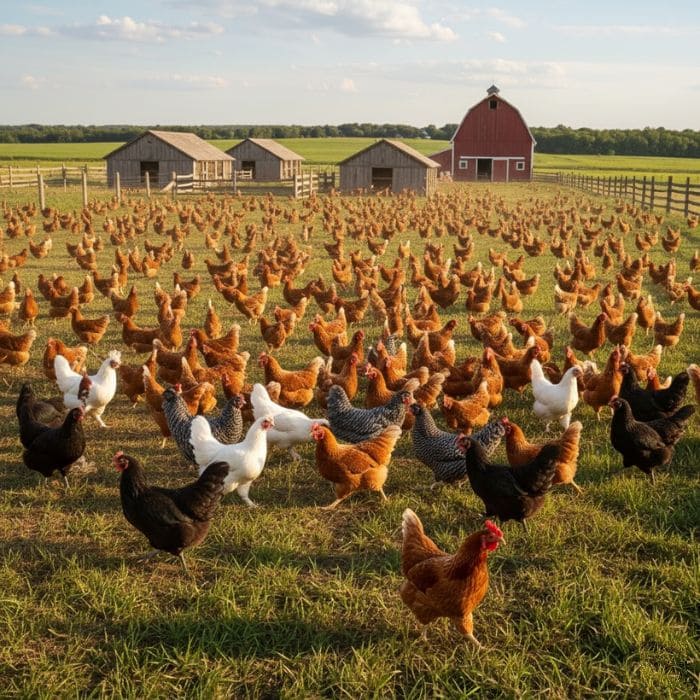
Reducing the size of my flock was not a failure or a retreat. It was a decision made with clarity. Today, I raise around 1,000 chickens on just over one hectare, and I do so intentionally.
People still tell me that I am wasting land and opportunity, and from a strictly commercial point of view, they are probably right. But this land is not a business plan to me. It is where I wake up, where I walk every morning, and where my days unfold at a pace that feels honest.
By choosing a smaller scale, I gave myself room to observe rather than react. I can notice changes in behavior before they become crises. I can adjust feed, shelter, and space without rushing.
Most importantly, I can enjoy the work again, which is something I had quietly lost when numbers became the priority.
The Flock and Why It Looks the Way It Does
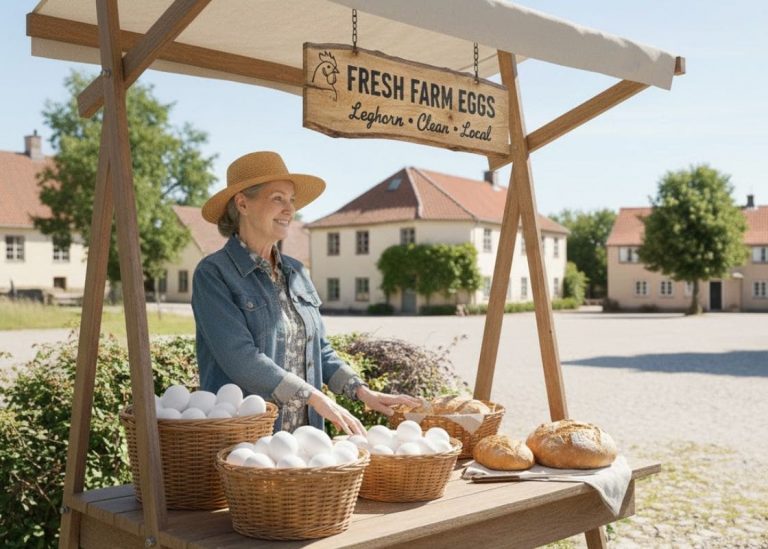
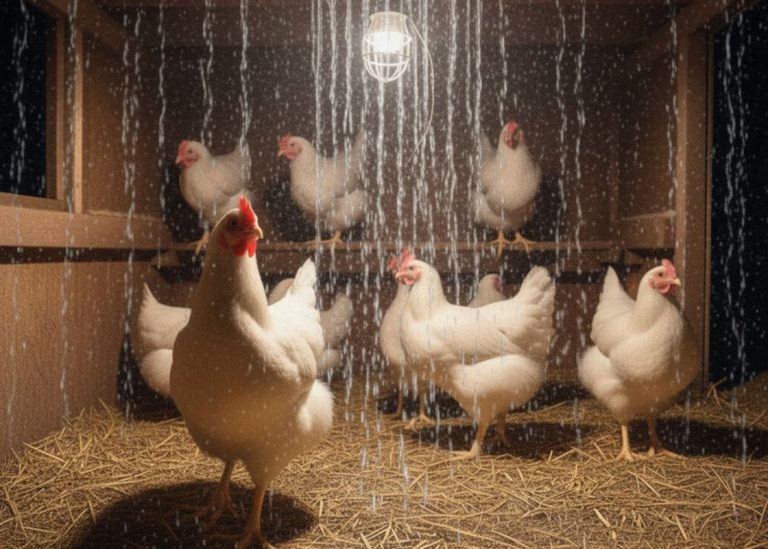
My flock is mixed, shaped by years of observation rather than market demand. I keep approximately 600 Leghorns for eggs. They are alert, energetic, and sensitive to change. Leghorns will show you very quickly if something is off, which makes them demanding but invaluable.
I raise Rhode Island Reds in smaller numbers because they bring stability. They move through the flock calmly, rarely stirring conflict, and their behavior often reflects the overall mood of the group. When the Reds are unsettled, I know to look closer.
I also raise around 50 Hubbard chickens for meat. This part of my work keeps me grounded. It reminds me that care and responsibility do not end at affection. Every decision matters, from feed to shelter to timing.
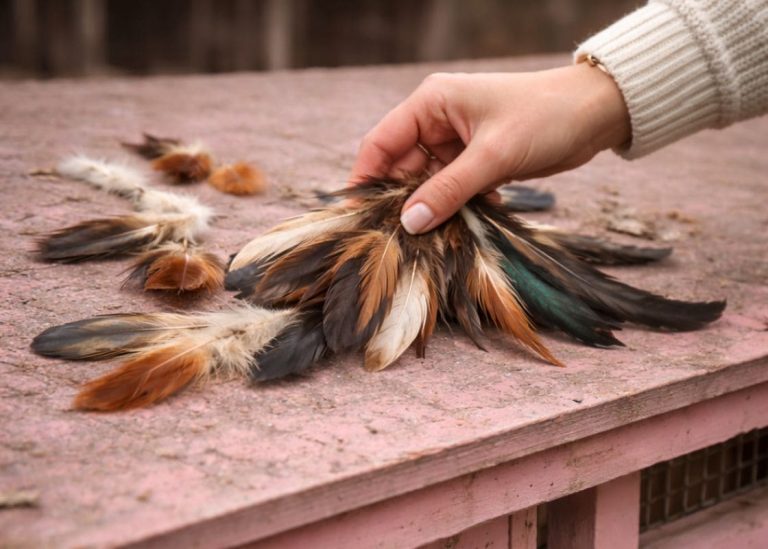
Sweater chickens live here as well, kept for their feathers and for the way they slow me down. They require gentler handling and patience, and they do not thrive under pressure. Their presence reminds me that not everything must justify itself through productivity.
There are other breeds scattered throughout the flock, some chosen for hardiness, some for temperament, and some simply because I enjoy their presence.
Chickens and the Myth of Easy Care
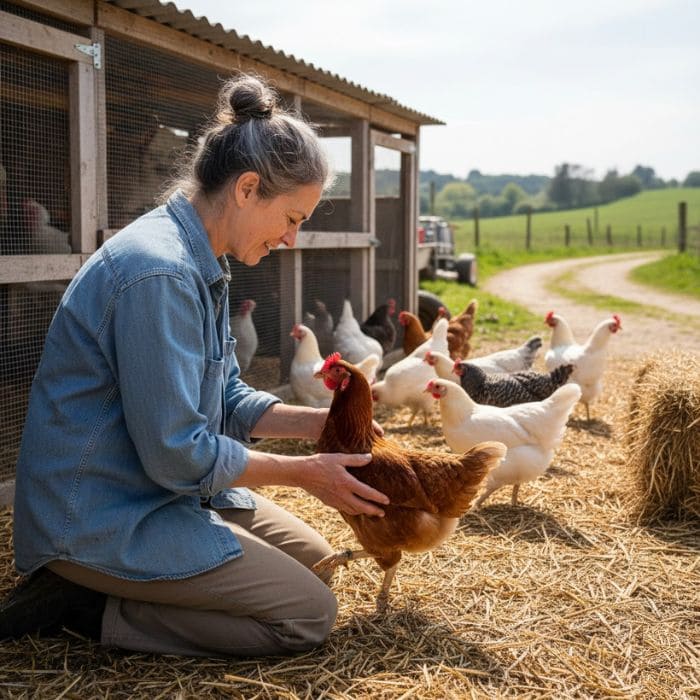
People often say chickens are easy animals, but I have never found that to be true. Chickens are social, observant, and reactive.
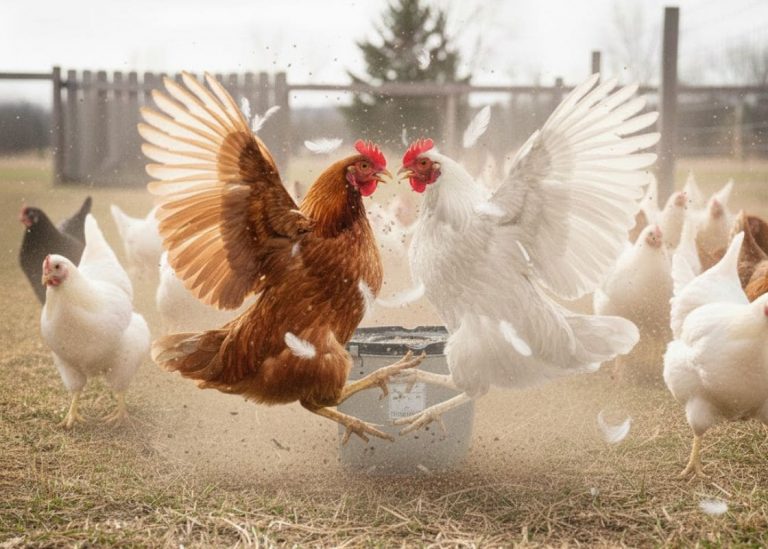
Each bird has a role, a tolerance level, and a response to stress. Conflicts happen daily, even in a well-managed flock. Illness often begins quietly, showing itself through subtle changes long before obvious symptoms appear.
Raising chickens requires leadership more than convenience. It means knowing when to intervene and when to step back. It means noticing which birds are being pushed away from feed, which ones linger alone, and which behaviors signal growing tension.
At larger numbers, I could only manage outcomes. At this scale, I can guide the system itself.
The Chickens I Know by Name
I do not name every chicken, but I name the ones who make themselves known to me. Old Hazel, a Rhode Island Red with a stubborn limp, continues to patrol her corner of the flock without accepting help.
Maple, a Leghorn, meets me at the gate every morning with such consistency that her absence would immediately worry me. Juniper, a Sweater hen, allows my presence but never forgets a mistake.
These names are not sentimental gestures. They are practical markers of attention. When a named bird changes behavior, it often signals a shift affecting others. They become my early indicators, long before problems show up across the flock.
What My Days Actually Look Like
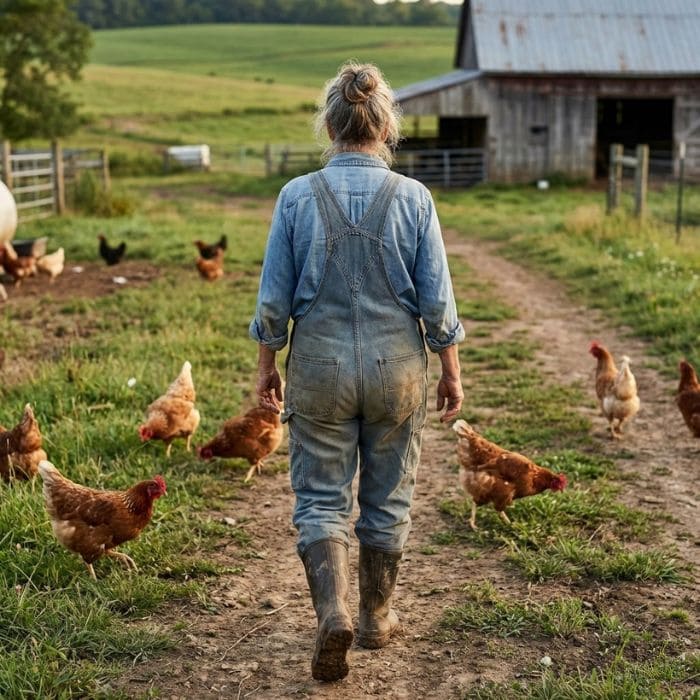
My mornings begin early, with a full walk of the hectare before I touch feed or collect eggs. I listen first. I watch how the birds move, where they gather, and where they avoid. I check water sources, shade areas, fencing, and ground conditions while taking note of sound and posture.
Feeding is adjusted constantly. Weather, season, and behavior all play a role. I scatter feed deliberately to reduce competition and encourage movement. Egg collection happens mid-morning, done slowly, because calm birds break fewer eggs and stay healthier overall.
Midday is for maintenance. I clean waterers, repair small damage, adjust shelter, and observe quietly. This is often when subtle issues reveal themselves, through feather condition, energy levels, or changes in appetite.
Evenings are for closure. I walk the land again, listening for unfamiliar sounds and watching the flock settle. I no longer count birds by number. I recognize patterns, and when something feels wrong, experience tells me to look closer.
What This Farm Means to Me Now
Many people talk about enjoying life after years of hard work, as if living must wait until effort is finished. For me, the work has always been part of the living.
I do not measure success by how many chickens I can fit into a hectare. I measure it by how calm the flock feels at dusk, how rarely illness surprises me, and how present I feel at the end of the day.
This farm is smaller than it once was, but it is more honest. It allows me to care deeply, notice fully, and live a life that feels rooted rather than rushed.