When Bumblefoot Took Over My Rhode Island Reds
If there is one breed on my farm that taught me patience the hard way, it is my Rhode Island Reds. I have raised more than six hundred of them over the years, and I still admire them deeply. They are solid birds, steady in temperament, dependable in routine, and confident without being aggressive. They…
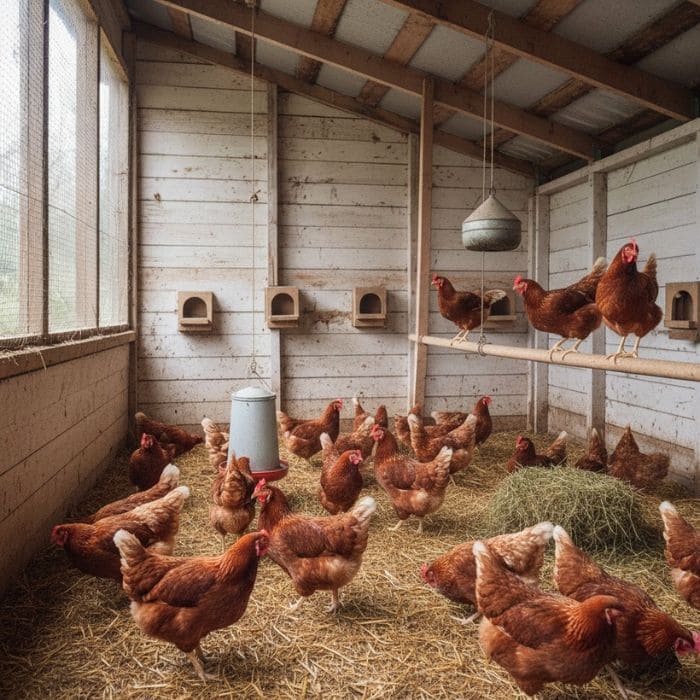
If there is one breed on my farm that taught me patience the hard way, it is my Rhode Island Reds.
I have raised more than six hundred of them over the years, and I still admire them deeply. They are solid birds, steady in temperament, dependable in routine, and confident without being aggressive.
They walk the land with purpose, not darting like Leghorns and not withdrawing like my Sweater chickens. They move as if they belong wherever they stand, and most days, that confidence is exactly why I trust them.
That same confidence, however, is also what led me into my biggest health struggle with them.
Rhode Island Reds are ground-focused birds. They walk a lot and they scratch deeply. They put their full weight into every step.
On my farm, where the soil shifts with rain, compost, and seasonal moisture, that constant pressure on their feet became a quiet problem long before I understood it fully. By the time I realized what was happening, bumblefoot had already made itself at home.
The Summer Everything Changed
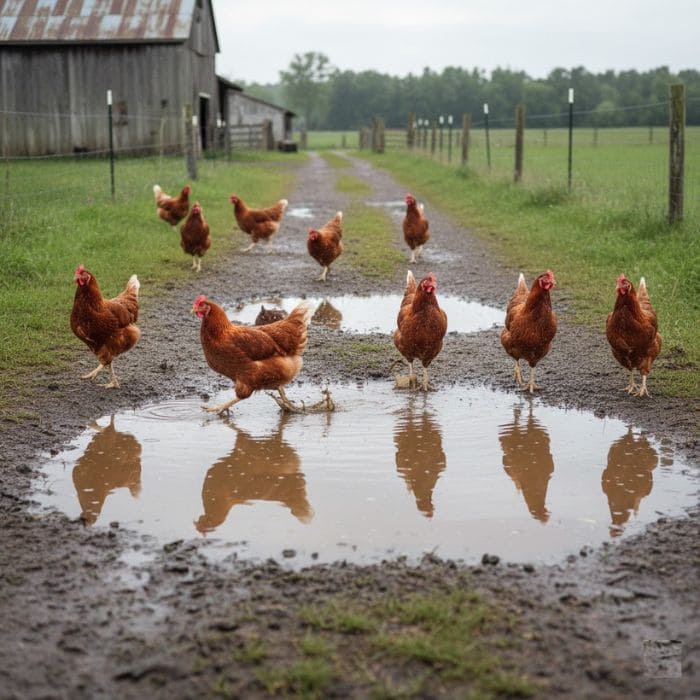
Last summer, North Hollow was hit with a stretch of weather that tested everyone’s patience. We had heavy rain that lasted more than three days without pause.
The ground stayed soaked, paths turned slick, and the high-traffic areas around feeders and coop entrances became soft and uneven.
Then, just as quickly, the rain stopped. The sun returned hard and dry, baking the ground until those same areas turned compacted and unforgiving.
At first, nothing seemed wrong. The flock moved as usual. Egg production stayed steady. But within weeks, I began to notice small changes.
A hen resting longer than normal, while another favoring one foot but still trying to keep up. Rhode Island Reds are stubborn birds. They do not show weakness easily, and that is what makes bumblefoot so dangerous with them.
By the time I started checking feet closely, the problem was already widespread.
When Half the Flock Was Affected
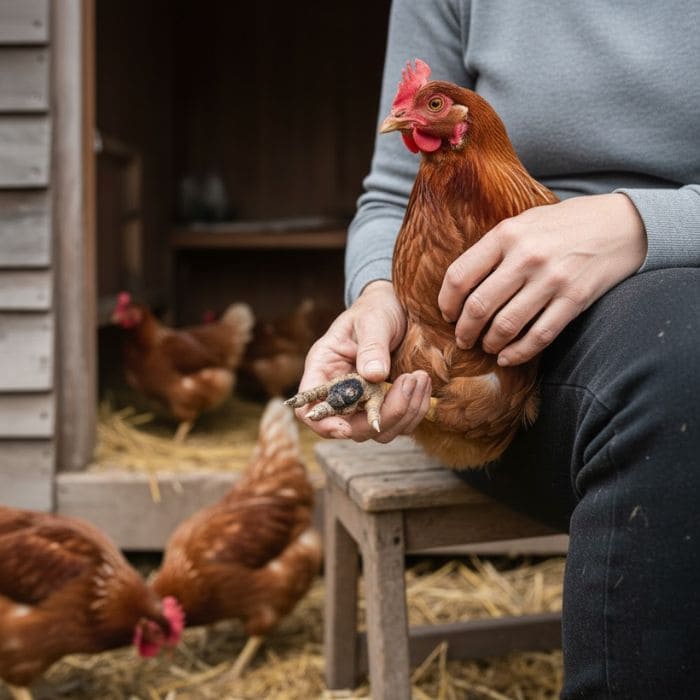
I remember the moment clearly, I sat on a low stool near the coop, lifting one bird after another, and realizing that nearly half of my Rhode Island Reds showed signs of bumblefoot.
Some had obvious black scabs in the center of the pad. Others had swelling, heat, and tenderness without visible wounds yet. A few were already limping badly, but most were still walking through pain without complaint.
Why I Chose Soaking as My Main Treatment
I had read about many methods, cutting, wrapping, topical treatments, and isolated care. Some of those approaches work well for individual birds, but with hundreds affected, I needed something gentler and sustainable.
Soaking became the foundation of my treatment because it addressed the problem at its root. It softened hardened tissue, reduced swelling, encouraged circulation, and allowed healing without force.
That is how the idea of a chicken spa was born, partly out of necessity and partly out of humor to keep myself sane.
Building the Chicken Spa
I started with containers. For my scale, I used a round plastic livestock tub, the kind sold at farm supply stores, about 90 centimeters in diameter and 30 centimeters deep.
It was lightweight, easy to clean, and wide enough to soak several birds at once without crowding. One tub comfortably held four to six Rhode Island Reds, depending on their size.
For readers with fewer chickens, a simple plastic storage container or shallow tote works just as well. The key is width, not depth as chickens do not need to sit, they need to stand comfortably with both feet submerged.
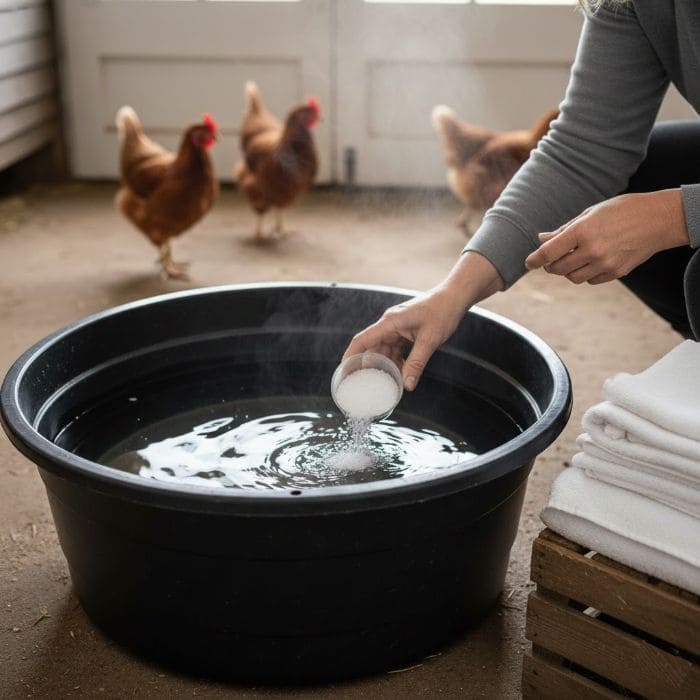
I filled the tub with warm water, aiming for a temperature close to body warmth, around 38 to 40°C. If the water felt soothing to my wrist and never hot, it was right.
I dissolved Epsom salt until the water felt slightly heavy, not grainy. I did not measure precisely, but roughly one cup of Epsom salt per ten liters of water worked well for me.
Beside the tub, I prepared thick towels, always clean and dry, stacked and ready. Preparation mattered. Once the birds arrived, everything needed to be calm and smooth.
Turning Treatment Into Routine
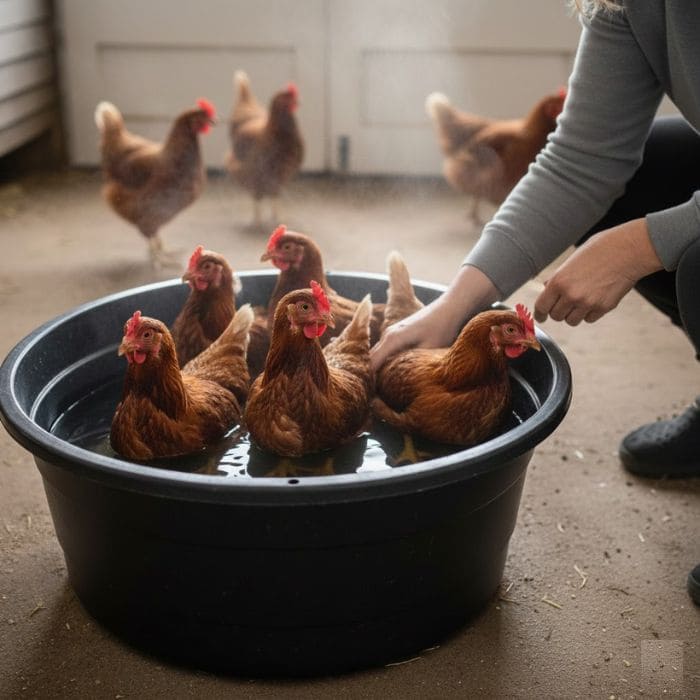
I soaked birds in small groups, usually late morning when the flock was relaxed and the ground already warm. Each session lasted 15 to 20 minutes.
At first, many birds protested. Rhode Island Reds do not like being contained. But once their feet settled into the warm water, most grew still. Some even closed their eyes.
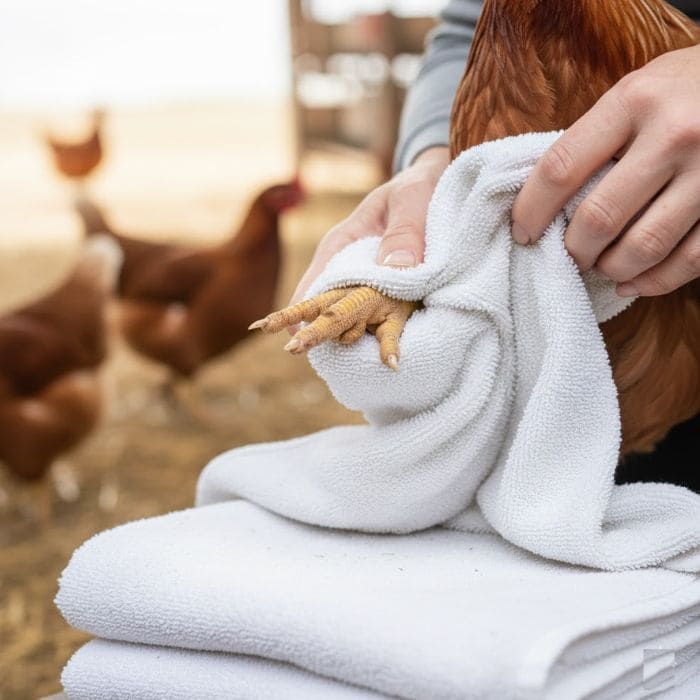
After soaking, I lifted each bird gently, dried the feet thoroughly, and inspected the pads. In many cases, swelling had already reduced, and hardened areas softened enough to clean safely.
Birds with more severe cases were kept in dry, clean areas afterward, but most returned directly to the flock without issue.
I repeated this routine daily for the most affected birds and every other day for milder cases.
Changes I Made Beyond Treatment
Soaking alone would not have solved the problem if I had not changed the environment.
I softened the ground in high-traffic areas with deeper bedding and better drainage. I adjusted perch heights and smoothed rough edges. I also paid closer attention after heavy rain, knowing now how quickly conditions could turn against foot health.
Since then, bumblefoot still appears occasionally, but never at the scale I experienced that summer. Early signs are easier to catch now because I know what to look for, and I act immediately instead of waiting.