This Snack Patch Made My Flock Happier
When people picture a farmer, they often imagine someone disconnected from the modern world, but the truth is that after a long day on the land, I still sit down with my phone like anyone else. I scroll, read and watch what other farmers are trying, especially those who share small, practical ideas rather than…
When people picture a farmer, they often imagine someone disconnected from the modern world, but the truth is that after a long day on the land, I still sit down with my phone like anyone else.
I scroll, read and watch what other farmers are trying, especially those who share small, practical ideas rather than big, expensive systems. That is how this story began, not in the field, but on Instagram.
One evening, while resting my legs and letting the dust settle, I came across a post about something called a snack patch for chickens. It was simple, almost too simple.
A small growing area planted just for chickens to graze from directly. No harvesting, just living food, right at ground level. I saved the post and thought about it for days.
The Idea That Would Not Leave Me Alone
The method was shared by a farmer named Shelly, who explained that she built her snack patch using wooden boards as borders.
She described it casually, like something anyone could do on a free afternoon. That was what caught my attention.
The only problem was that I had already used every piece of spare lumber in my shed. Repairs, perches, temporary fencing, all of it had eaten through my wood pile. For a moment, I almost gave up on the idea.
Then I remembered where I live. I have an orchard.
Building the First Snack Patch With What I Had

Instead of boards, I drove out to the orchard trees and walked slowly, looking for fallen material that was already dry and no longer living.
I chose short wooden logs, each about 40 to 60 centimeters long and roughly 8 to 12 centimeters thick. They were solid enough to hold shape but light enough to move without strain.

Back near the coop, I laid them into a rectangle, pressing them firmly into the soil so they would not roll. The shape did not need to be perfect. What mattered was creating a clear boundary that chickens would respect without fencing.
To secure them, I used a simple mallet and tapped each log just deep enough to stay in place. The whole structure took less than an hour, and by the end, I had a neat rectangle that felt grounded and natural, like it had always belonged there.
The Real Secret Inside the Patch

The border was only the frame. The heart of the snack patch was what went inside and I used wheat berries.
I ordered them online from an agricultural supply shop, choosing untreated, whole wheat berries meant for sprouting.
Wheat berries are dense in nutrients and excellent for chickens. They provide fiber for digestion, natural energy, and trace minerals, and when grown fresh, they become living greens that chickens instinctively recognize as food.
I loosened the soil inside the patch with a hand fork, mixed in a small amount of compost, and scattered the wheat berries evenly across the surface.
I did not bury them deeply. A light covering of soil, just enough to keep them moist and hidden, was enough. Then I watered gently.
Waiting, Watching, and Protecting the Patch
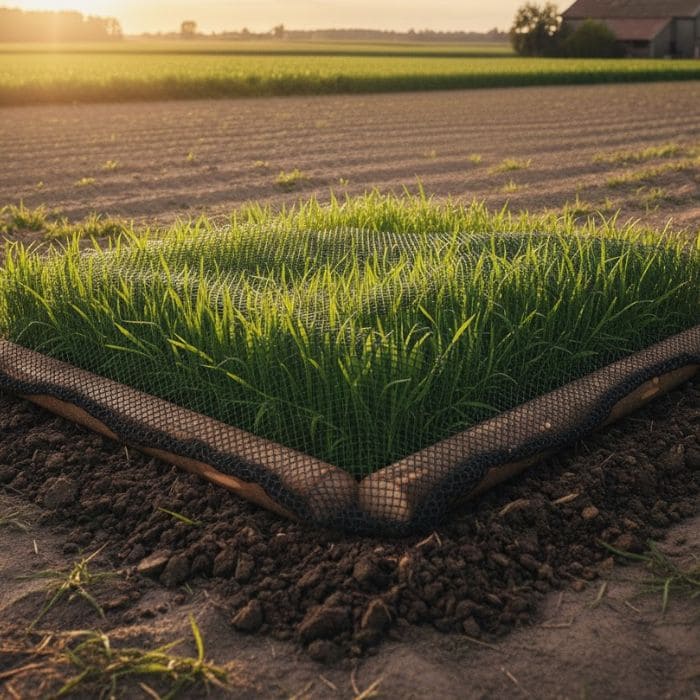
Within a few days, green shoots appeared. By day five or six, the growth was obvious, and by 10 to 14 days, the wheat reached about 12 to 15 centimeters tall, which I found to be the perfect height. Tall enough to survive pecking, but tender enough to be irresistible.
During the growing period, I covered the patch lightly with a piece of mesh supported by small stones.
This was not to keep all chickens out, but to stop the most aggressive eaters, especially my Leghorns, from wiping it out before it had a chance to establish. That cover stayed on until the wheat was strong enough to handle traffic.
Daily care was minimal. A light watering once a day in dry weather, or every other day if the soil stayed moist. You don’t need to fertilize and trim them.
The First Time I Let Them In
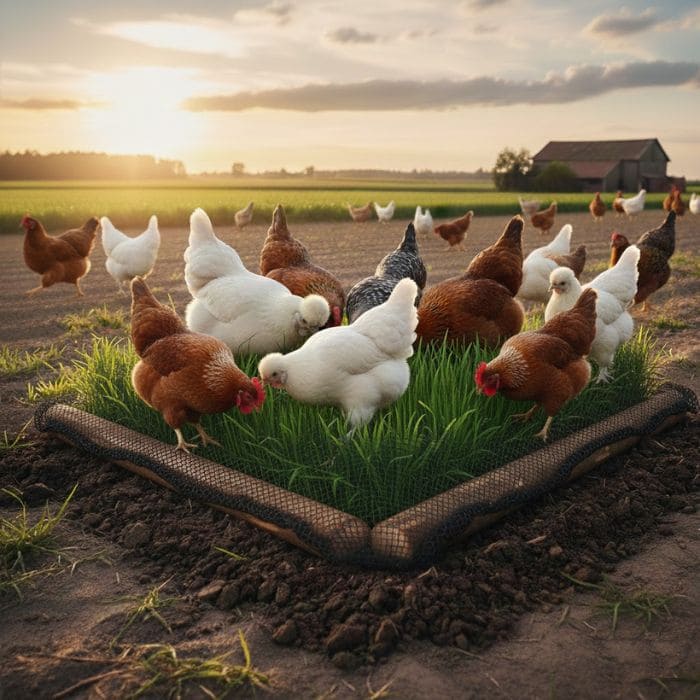
When I let the flock access the patch, the reaction surprised me. They did not rush it the way they rush feed. They approached slowly, pecked gently, and then settled into grazing.
There was no frantic competition and no chasing. Birds spread out naturally, taking turns, moving in and out of the patch like it was part of the landscape rather than a prize.
That afternoon, the flock stayed calmer than usual. Less pacing, less noise and more resting. That was when I knew this was more than enrichment.
Scaling Up Across the Farm
I started with three snack patches, one near each major coop. Within weeks, I built more. Today, I have six snack patches, spaced so that no group has to travel far or compete unnecessarily.
Each patch serves its immediate area, reducing pressure on any single spot. The land stays healthier. The chickens stay busier in a peaceful way.
And I spend less time managing boredom-related problems like feather picking or unnecessary aggression.
Variations and Simple Advice
Wheat berries are my favorite base, but they are not the only option. You can mix them with oats, barley, or even sprinkle in clover seed. Just avoid anything treated or coated.
If you only have a few chickens, a shallow plastic container or old storage bin works just as well as logs. The principle matters more than the material.
Especially, always protect the patch during early growth. One determined chicken can undo a week of waiting in minutes.