My Quiet Joy to Visit the Leghorn Coop Each Morning
There are several breeds on my farm that lay eggs, but the Leghorns are the reason my kitchen has never known an empty morning. Leghorns are not flashy birds, and they are not gentle in the way people expect affection to look like, but when it comes to egg production, they are unmatched. A healthy…
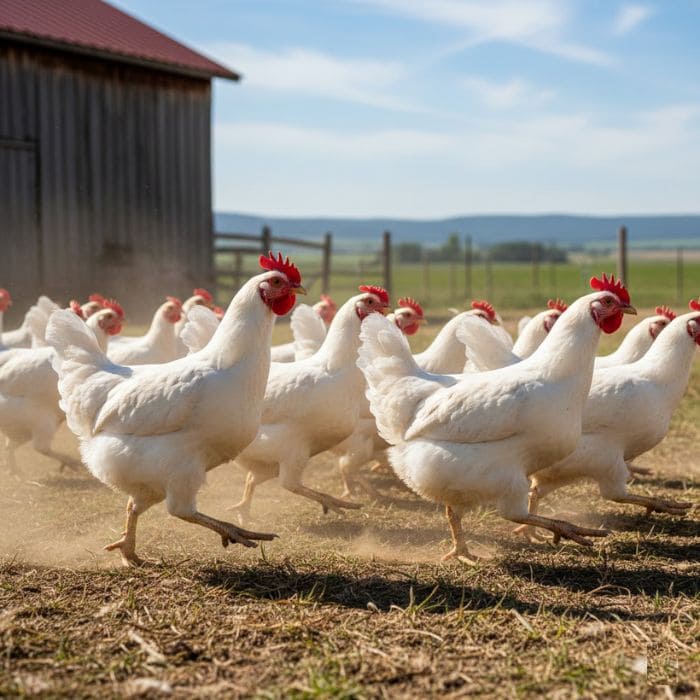
There are several breeds on my farm that lay eggs, but the Leghorns are the reason my kitchen has never known an empty morning. Leghorns are not flashy birds, and they are not gentle in the way people expect affection to look like, but when it comes to egg production, they are unmatched.
A healthy Leghorn hen can lay 280 to over 320 eggs a year, and when you raise them with space, calm routine, and good nutrition, they rarely miss a day.
Since I began raising them seriously, there has not been a single day on my farm without eggs. That is not an exaggeration. Even in heat, even during weather shifts, even when other breeds slow down, the Leghorns keep going.
That reliability is why visiting their coop is the first joy of every day for me.
How I Collect Eggs From the Leghorn Coop
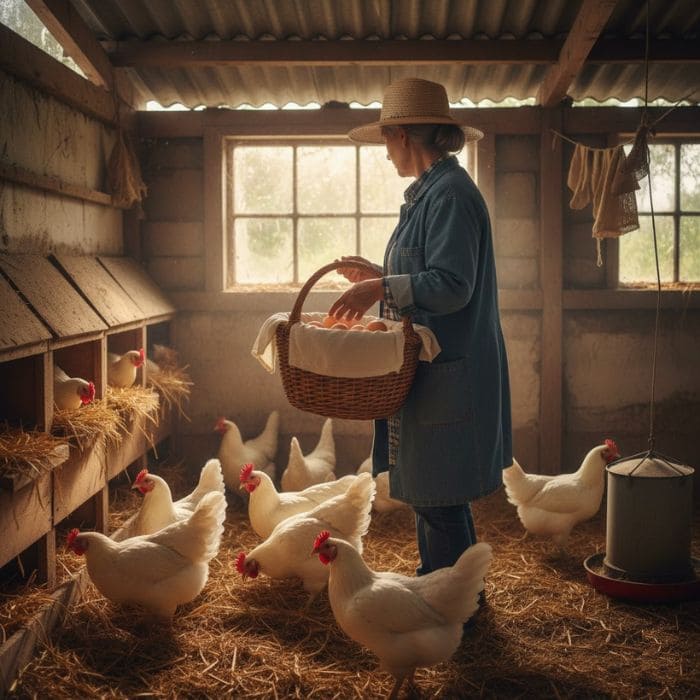
I never collect eggs early or in a rush. Leghorns lay best when they feel undisturbed, so I wait until mid-morning, when most of the flock has finished and settled back into scratching and foraging.
I carry two wide baskets lined with soft cloth, never plastic alone, because plastic sweats and warm eggs crack easily.
I move slowly through the coop, starting from the quietest nest boxes first. My hand always goes in palm-up, lifting the egg gently rather than pinching it.
Leghorn eggs are usually warm when freshly laid, smooth, and firm, with shells that feel stronger than many other breeds. I listen as I collect. A sharp call nearby means another hen is not done yet, and I leave that box alone.
Each egg is placed point-down in the basket, which keeps the air cell stable and protects freshness. Broken eggs attract trouble, so calm hands matter.
What Leghorn Eggs Are Like
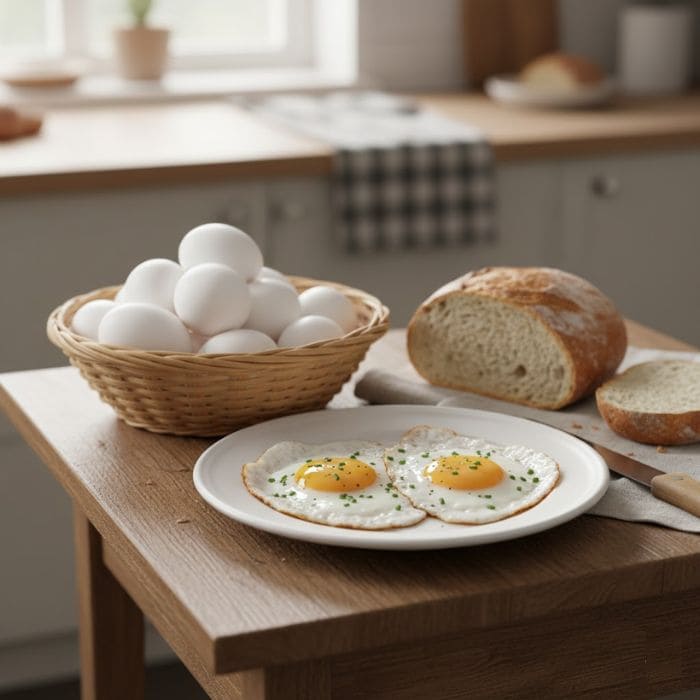
Leghorn eggs are usually clean white, sometimes bright porcelain, sometimes slightly off-white depending on diet and season.
The shells are hard, which makes them excellent for storage and transport. When cracked open, the yolks stand tall. They are not pale. With access to greens and grains, the yolks turn a rich yellow with a clean, balanced flavor that cooks evenly.
They make the best breakfast eggs on my farm. Fried softly, the whites stay tight and the yolk holds its shape. Boiled, they peel cleanly after a few days of rest. These are eggs that behave the way eggs should.
The Day the Baskets Would Not Empty
It was late spring, perfect laying weather, long daylight, cool nights, no stress. I collected once in the morning and thought it was a good haul. I collected again after lunch, just to be safe. Then again in the late afternoon, because something told me not to skip it.
By the time I finished counting, I had gathered over 1,000 eggs in a single day.
I stood there in the coop, surrounded by calm Leghorns, baskets full, and said out loud, “Oh my God.”
I am not a wholesaler. I am not running an industrial operation, either.
For me, that number felt enormous. It was joy mixed with disbelief, the kind that makes you stop and breathe before moving again.
What I Do With All Those Eggs

At home, eggs are sorted carefully. I do not wash them unless absolutely necessary. A dry wipe is enough most days. They go into cartons marked “North Hollow Farm – Home Eggs”, dated by hand.
My refrigerator fills quickly, shelf by shelf, and there are days when opening the door feels like opening a small vault.
Breakfast becomes an event without trying to be one. Fresh eggs scrambled slowly, fried gently, or boiled and sliced with bread. Food tastes different when it is abundant and earned.
Where the Eggs Go Next
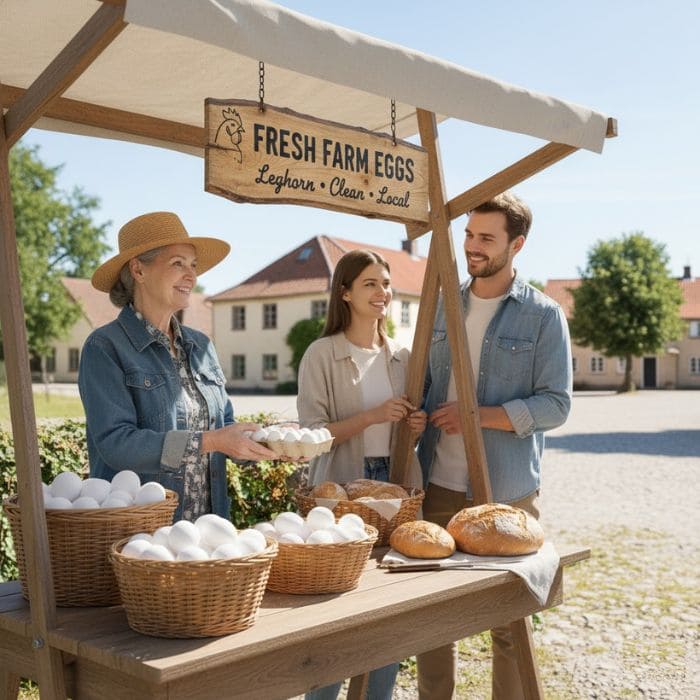
I cannot eat that many eggs, and I do not try to. Eggs are meant to move through hands and homes.
Three days a week, usually Tuesday, Thursday, and Saturday, I load the car in the afternoon and drive into town.
I sell my eggs at a small local market near the square, and sometimes directly from the farm for people who know to stop by. A simple sign hangs near the gate on those days:
FRESH FARM EGGS
Leghorn • Clean • Local
The price has always been steady, something I decided early on. For many years, I sold my eggs for $4 a dozen, even when feed costs crept up, because the people who bought from me were neighbors before they were customers.
When avian influenza disrupted supply and store prices jumped overnight, I adjusted carefully, raising my price to $6, sometimes $7 a dozen, never more.
Some buyers linger, asking about the hens, the feed, the color of the yolks. Others arrive with cartons in hand, exchange a few words, and leave with a quiet nod.
They already know what they are buying. I tell everyone the same thing, without rehearsing it. If they ever want to see where the eggs come from, they are welcome to visit the farm, as long as they move slowly, speak softly, and respect the birds.