Here’s Way I Encouraged My Chickens to Exercise More
I have always kept treats on hand for my chickens. For years, my usual method was simple and familiar. Grains and seeds packed into mesh bags, hung low or placed around the run. It worked well in the beginning. The flock would rush in, peck eagerly, and move on. Over time, though, I noticed something…
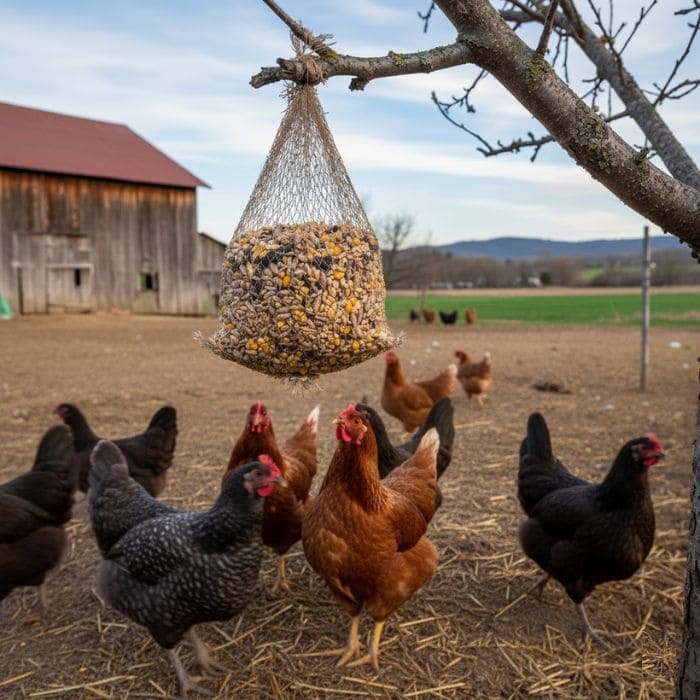
I have always kept treats on hand for my chickens. For years, my usual method was simple and familiar. Grains and seeds packed into mesh bags, hung low or placed around the run. It worked well in the beginning. The flock would rush in, peck eagerly, and move on.
Over time, though, I noticed something shift, especially with my Hubbard chickens. The mesh bags became background noise. The birds pecked once or twice and then lost interest.
The treat was there, but the motivation was gone. In hot weather, it became even worse. Heavy birds, high temperatures, and dry air do not encourage enthusiasm.
That was when it occurred to me that if I felt drained by the heat, my chickens probably did too. What they needed was not just food. They needed something cool, interactive, and worth the effort.
Why Corn Was the Right Choice
Corn has always been a favorite on my farm, but I use it carefully. It is energy-dense, satisfying, and chickens genuinely enjoy the taste. Corn also has a texture that holds well when frozen, which makes it perfect for slow-release treats.
I do not use corn alone. I mix it lightly with a few seeds, usually millet or cracked wheat, just enough to add variety without overpowering the corn. That combination keeps the birds interested. The corn draws them in, and the mixed grains keep them working at it longer.
In hot weather, frozen corn does something else that matters just as much. It cools them down gradually. They peck, pause, peck again.
How I Make the Frozen Corn Rings
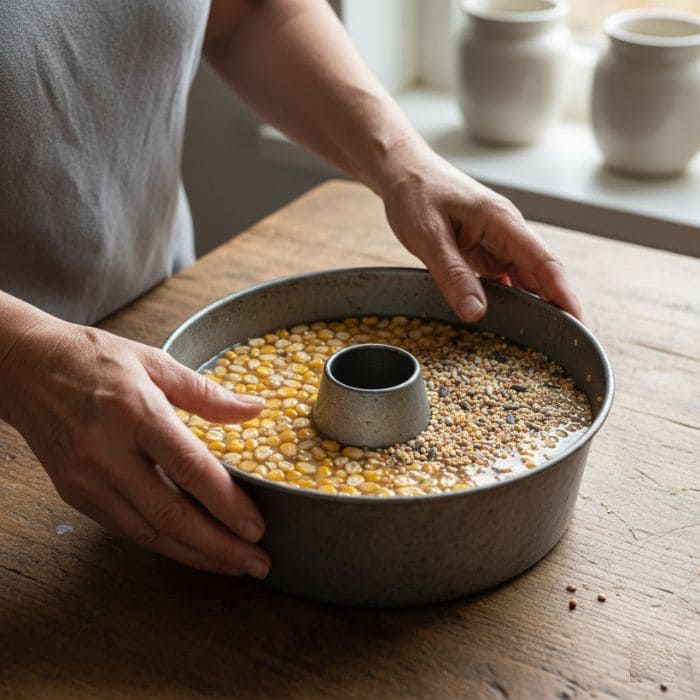
I use an old metal ring mold, the kind once meant for cakes. Mine is about 20 to 22 centimeters in diameter, sturdy, and no longer used for kitchen food. Size matters here. Smaller rings melt too quickly. Larger ones become heavy and awkward.
For each ring, I use:
- About 2 cups of whole corn kernels
- A small handful of mixed grains or seeds
- Enough water to just cover the mixture, usually 1½ to 2 cups
I mix everything directly in the mold, tap it gently to release air pockets, and place it flat in the freezer. It takes 6 to 8 hours to freeze solid, but I usually leave it overnight to be sure.
Once frozen, the ring comes out easily if you let the mold sit at room temperature for a minute.
Hanging the Ring Correctly
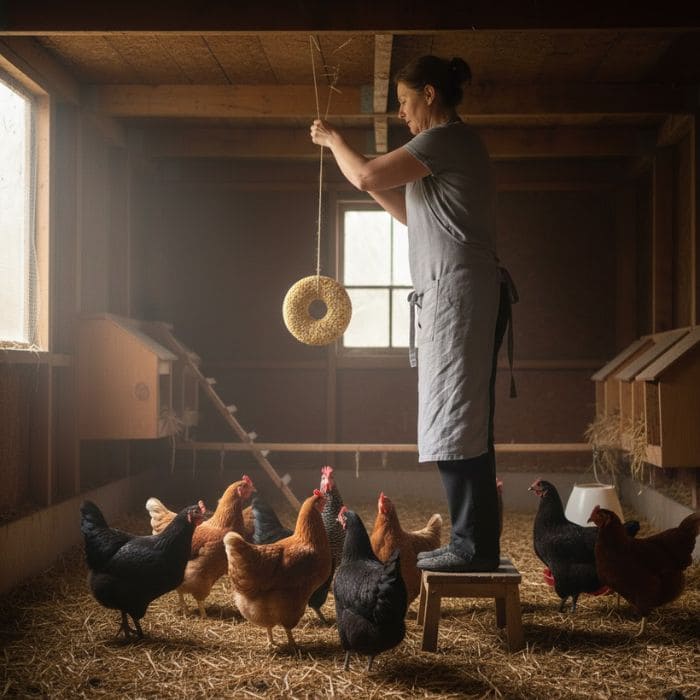
I thread a strong string or thin rope through the center of the ring. The length of the string matters more than people expect. I cut mine at about 80 to 100 centimeters, long enough to swing freely but short enough to stay out of the dirt.
The ring is tied to a wooden pole, a sturdy branch, or a beam inside the run.
I hang it so the bottom of the ring sits just above chest height for the Hubbard chickens. They should not be able to reach it without effort, but they should not struggle dangerously either.
For a group of 50 Hubbard chickens, I hang three to four frozen corn rings at once, spaced apart. One ring creates competition. Several rings create movement.
What Happens When the Rings Go Up
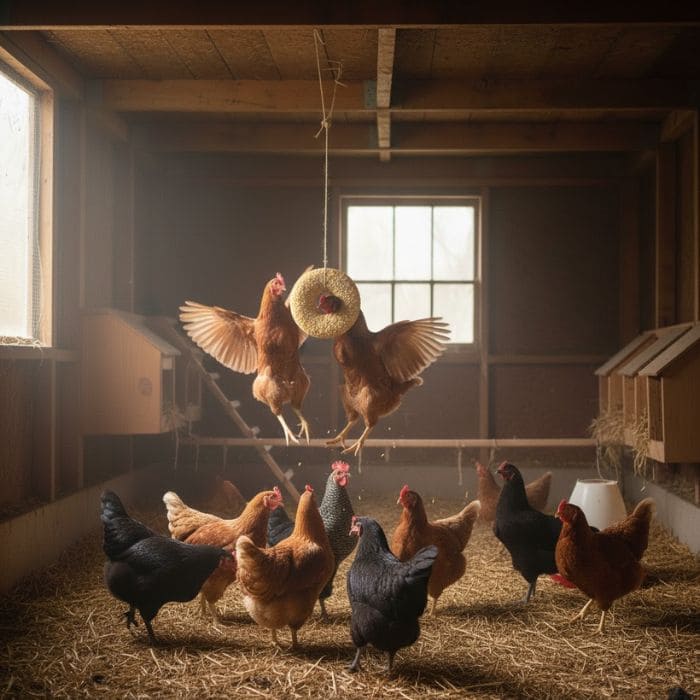
The reaction is always the same at first, they are curious. A few birds approach slowly. One pecks and jumps back when the ring swings. Another tries again.
Soon, several birds are jumping, stretching, flapping briefly, missing, laughing in their own chicken way, and trying again.
Hubbards are not elegant jumpers. They launch with commitment rather than grace. That is exactly what makes this work.
Legs engage, balance improves, and muscles activate. The ring moves, spins, and refuses to cooperate, which turns a simple treat into a full activity.
The frozen surface slows everything down. They cannot tear it apart quickly. A single ring can last 30 to 45 minutes, sometimes longer in cooler shade. During that time, the flock stays busy without stress.
Using This Across the Farm
I still use mesh bags occasionally, but frozen rings have become my main summer treat.
On cooler days or in other coops, I switch to hanging cabbage or other vegetables, using the same principle. Treats should move and require effort.
For Hubbards especially, this method makes a clear difference. They rest better afterward, move more confidently and their bodies feel stronger rather than heavy.