Chicken Poop Is Black Gold on My Farm
When you raise close to a thousand chickens, cleaning the coop is not a chore you put off until tomorrow. It is part of the rhythm of the day, as regular as checking water or closing doors at dusk. People sometimes react with discomfort when I talk about chicken poop so casually, but on my…
When you raise close to a thousand chickens, cleaning the coop is not a chore you put off until tomorrow. It is part of the rhythm of the day, as regular as checking water or closing doors at dusk.
People sometimes react with discomfort when I talk about chicken poop so casually, but on my farm, it has never been something to avoid.
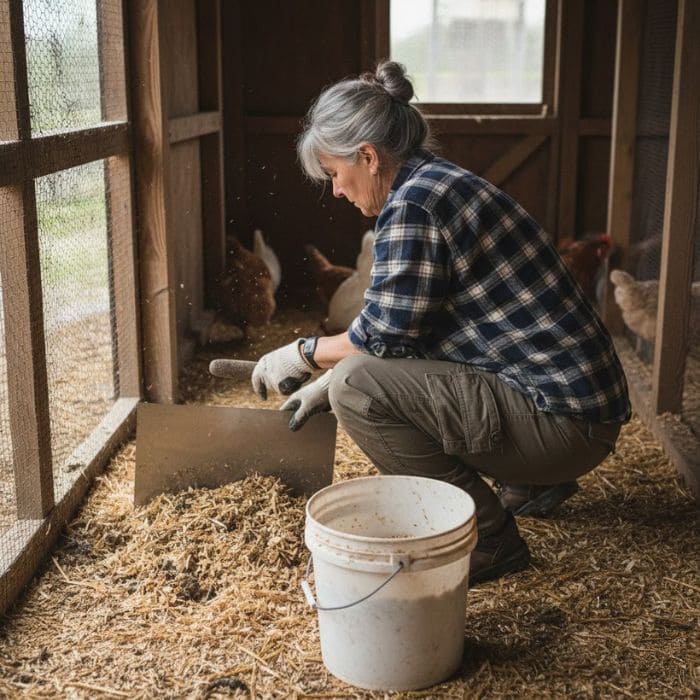
Every morning, after the birds have moved outside and the coops quiet down, I begin cleaning.
I use a wide taping knife, the kind used for drywall work, because it slides smoothly under dried droppings without scraping or damaging the floor. It fits my hand well and saves my back.
In my other hand is a thick plastic bucket, roughly twenty liters, reinforced at the rim so it can handle weight. On most days, I collect between ten and fifteen kilograms of manure, while on wet or hot days, it can be more.
The First Stop for Every Bucket
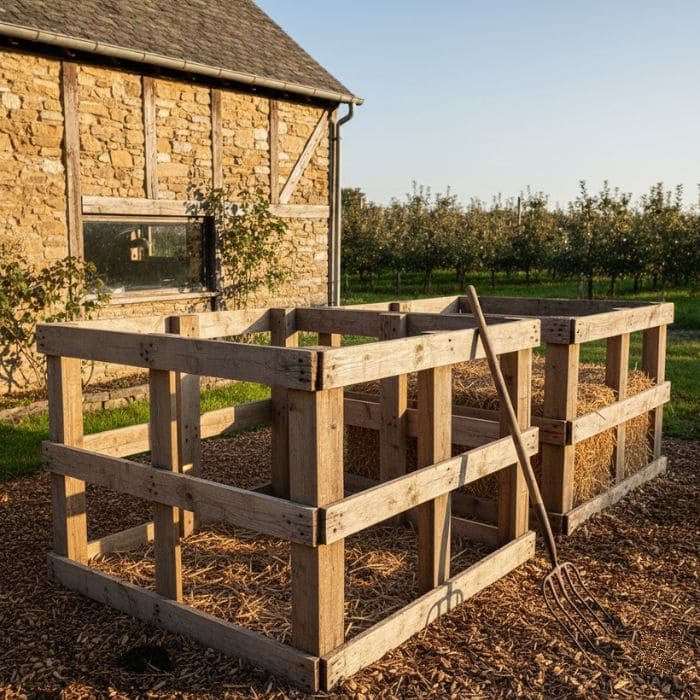
I do not haul the manure across the farm. That would turn a daily task into a burden. Instead, behind my cottage and just beyond the orchard rows, I have a dedicated compost area. It is simple, practical, and built for volume.
The main bin measures about one meter by one meter and stands roughly a meter tall. It is made from old pallets reinforced with wire mesh so air can move through while keeping everything contained.
Each day’s collection goes straight into this bin. I never leave fresh manure exposed. The smell, the flies, and the moisture problems begin the moment you do that.
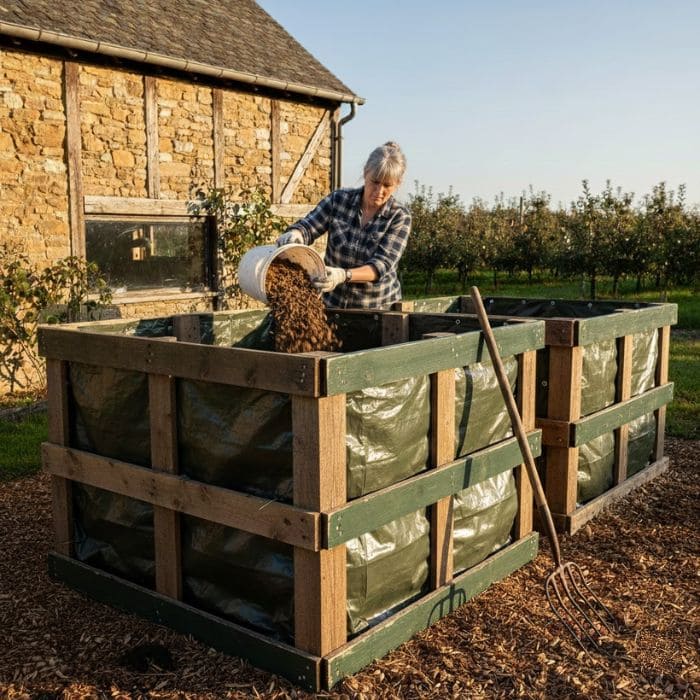
As soon as I dump the bucket, I cover the fresh layer with whatever dry material I have on hand. Most days, that is dried leaves collected from the orchard. In colder months, it might be straw.
That thin covering makes a big difference as it keeps insects away, locks in odor, and starts the composting process quietly.
Turning a Week’s Worth Into Fertilizer
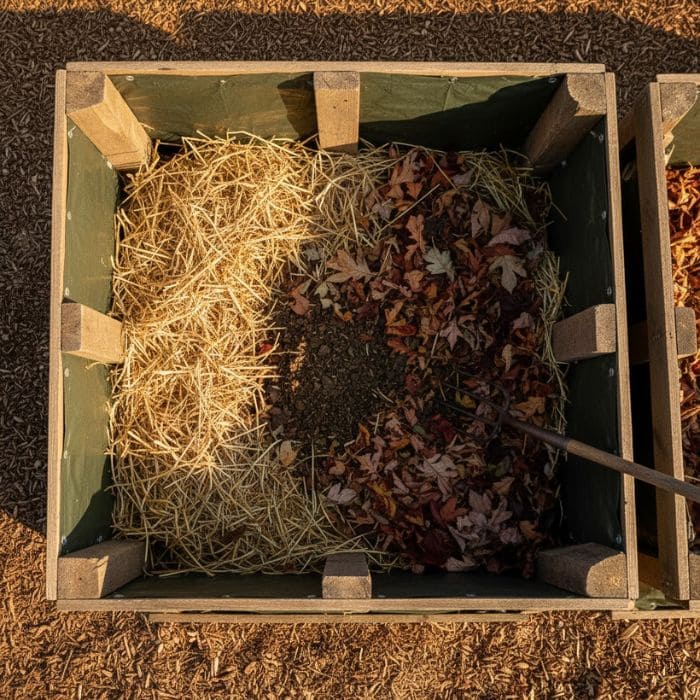
Once a week, usually on a calm morning when the air is cool, I turn that collection into compost. By then, the bin holds several days’ worth of manure, layered and ready.
Chicken manure is strong as it carries a high nitrogen content, which is wonderful for plants once it is broken down, but dangerous if applied raw. I learned early that patience is not optional here.
I shovel the manure into a working pile and begin adding carbon material. I aim for roughly one part manure to three parts dry material.
My carbon comes from two reliable sources. The first is dried leaves, which I have in abundance from the orchard. The second is straw, which I buy from the agricultural supply shop at the local market. They sell large, clean bales meant for farming use, not decorative straw. It is affordable, dry, and consistent.
I layer everything slowly. A layer of manure. A thick layer of leaves. A layer of straw. Then I add water, gently. The pile should feel damp, not wet. When I squeeze a handful, it should hold together briefly and then fall apart.
Learning to Read the Pile
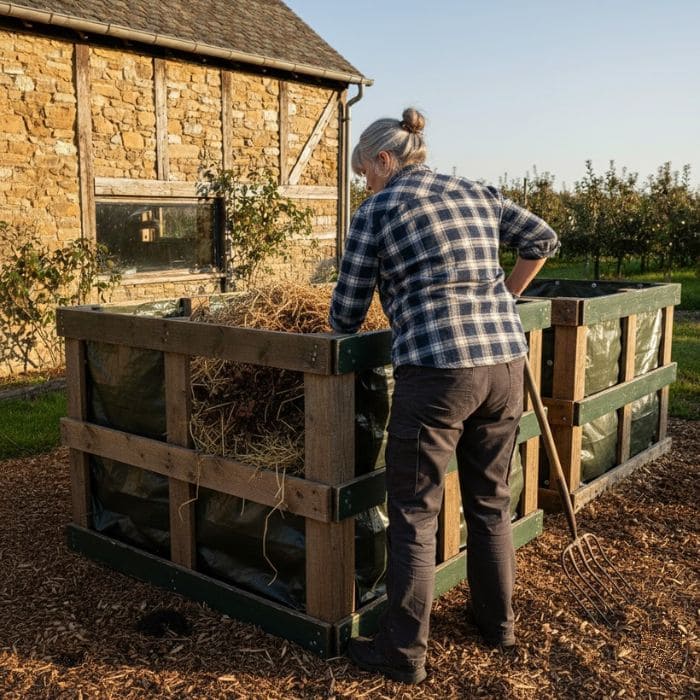
Within a day or two, the pile begins to change. I place my hand near the center and feel warmth. That warmth is life.
When it grows stronger, I check with a simple compost thermometer pushed deep into the core. When the temperature reaches between fifty-five and sixty-five degrees Celsius, I know the process is working properly.
That heat matters. It breaks down pathogens. It neutralizes harmful compounds and turns manure into something safe and stable.
Every few days, I turn the pile with a fork, pulling material from the edges into the center. Steam rises when I do this, especially in cooler weather. The smell shifts too. It becomes earthy, rich, and clean.
After four to six weeks, the transformation is complete. The material no longer resembles manure. It is dark, crumbly, and smells like soil after rain.
Bringing It Back to the Garden
I never rush the final step. Once the compost cools and settles, I carry it to my vegetable beds. I spread it as a top layer rather than digging it in aggressively. Worms, insects, and rain do the rest.
The results show quickly. Leaves grow thicker. Stems feel stronger. Soil holds moisture better without becoming compacted. Plants recover faster from heat stress.
This is why I call chicken manure black gold. It feeds the soil in a way nothing else on my farm can.
When I Need to Store It Longer
Sometimes planting is delayed by weather or time. When that happens, I store the finished compost properly. I cover the pile with a breathable tarp, weighted down so wind cannot lift it.
This keeps rain from flooding it and prevents mosquitoes from settling in. Fresh manure is never left uncovered, even for a day. That rule keeps my farm clean and my neighbors comfortable.