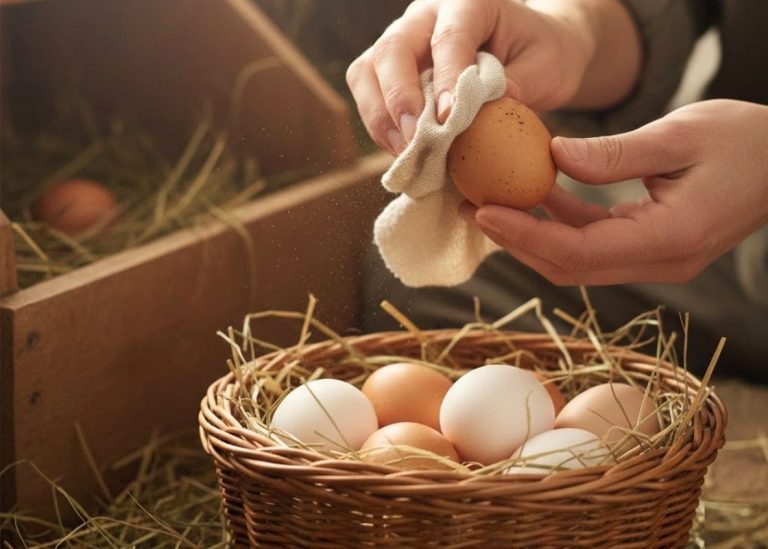
The Three Eggs I Trust Most on My Farm
Two weeks ago, I received an email that stayed with me longer than most. The woman who wrote to me lives in New York City. She said she works long hours, often shops in a hurry, and stands in front of the egg section at the supermarket feeling overwhelmed. Cartons promise everything such as organic,…

Two weeks ago, I received an email that stayed with me longer than most.
The woman who wrote to me lives in New York City. She said she works long hours, often shops in a hurry, and stands in front of the egg section at the supermarket feeling overwhelmed.
Cartons promise everything such as organic, free-range, omega-rich, golden yolks, and even happy hens. She told me she wanted to make good choices, but the labels blurred together, and she no longer knew what best
Reading her words, I realized that even I, a farmer who has spent most of her life with chickens, understands how confusing eggs have become.
That is why I decided to write this. Not as a comparison chart or advice shouted from a label, but as a story of three eggs I collect with my own hands, from three breeds I know well, and how each one earns its place in my kitchen.
Why Best Egg Depends on More Than Labels
Before I talk about breeds, I want to say this clearly. There is no single best egg for every purpose. An egg’s value changes depending on how it is cooked, how it is eaten, and what you care about most such as texture, flavor, appearance, and reliability.
On my farm, I raise Leghorns, Rhode Island Reds, and Hy-Line hens. I collect eggs from all three.
I cook with all three as well as sell all three. And I choose between them the same way I choose tools, based on what I need that day.
The Leghorn Egg: Precise, Clean, and Dependable
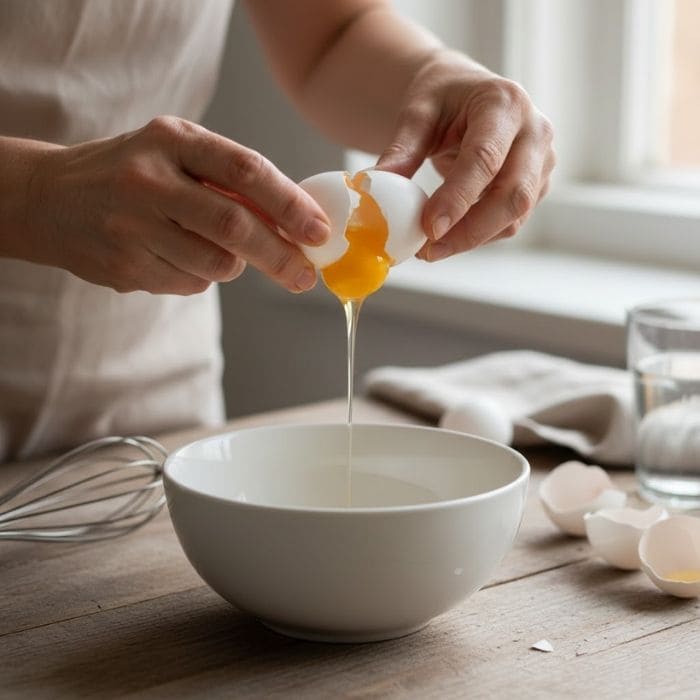
Leghorns are the backbone of my egg baskets. They are consistent layers, often producing an egg almost every day when conditions are right.
Their eggs are usually medium to large, smooth-shelled, and bright white, the kind most people recognize instantly in a carton.
When I crack a Leghorn egg, the white is clear and firm, not watery, and the yolk sits high and round before slowly relaxing. The shell breaks cleanly without crumbling.
The flavor is mild and clean. It does not dominate a dish, which is exactly why I use Leghorn eggs when I want control.
These are my eggs for frying sunny-side-up, boiling, poaching, and baking. They behave the way recipes expect eggs to behave.
When I hard-boil Leghorn eggs and let them rest a few days, the shells peel more easily, and the whites hold their shape without tearing. When I bake with them, batters stay light and structured. When I fry them, the whites set neatly without spreading too far.
The Rhode Island Red Egg: Warm, Rich, and Comforting
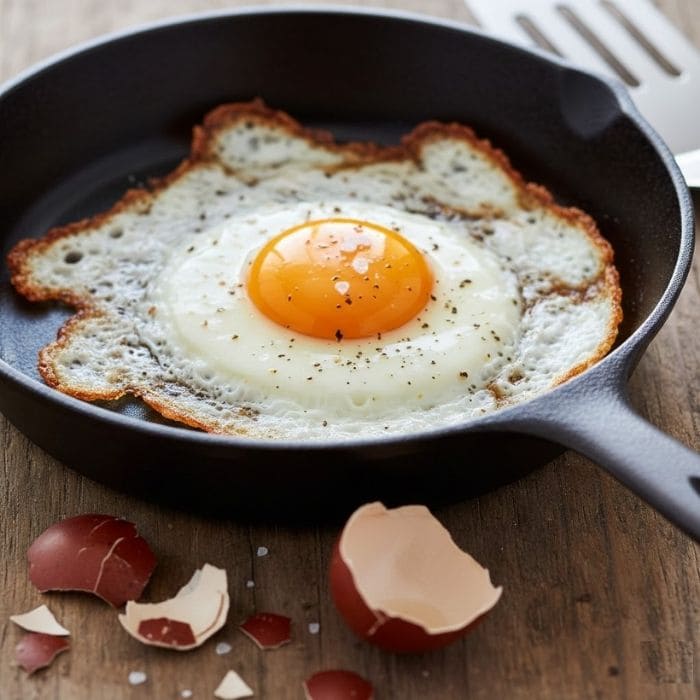
Rhode Island Red eggs announce themselves differently. The shells range from light brown to deep, earthy shades, and they feel slightly heavier in the hand, as if they carry more intention.
When cracked, the yolks are deeper in color, often a rich golden yellow that immediately signals richness. The whites are slightly softer, and the yolks melt into dishes rather than sitting apart.
These eggs taste fuller. Not aggressively strong, but rounded, warm, and satisfying. I reach for Rhode Island Red eggs when the egg itself is the focus of the meal.
Slow scrambles, omelets cooked gently, custards, quiches, anything where eggs are meant to feel nourishing rather than structural. When cooked low and slow, the yolks stay creamy and luxurious, and the dish feels comforting without being heavy.
These are the eggs I cook when I want food to feel steady and grounding, especially in cooler weather.
The Hy-Line Egg: Balanced and Everyday-Ready
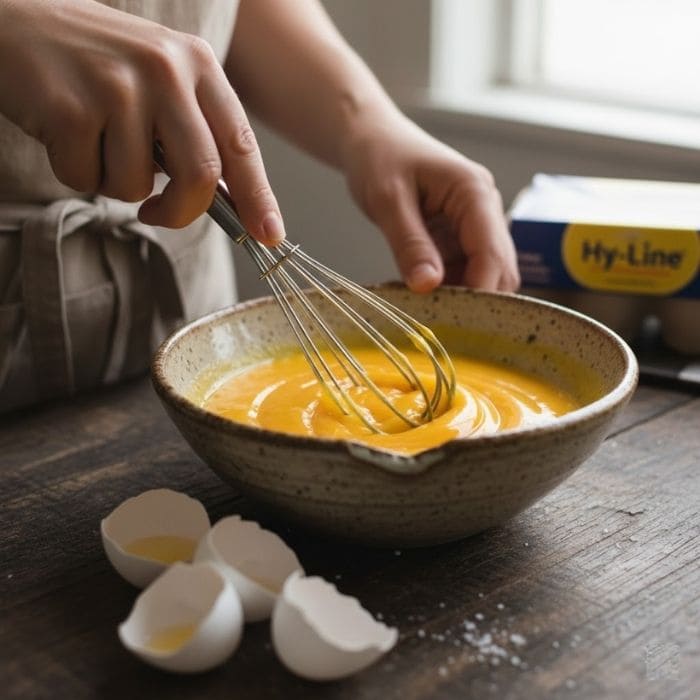
Hy-Line hens are bred for balance and efficiency, and their eggs reflect that purpose. The shells are usually light brown, uniform, and consistent. They are not dramatic, but they are dependable.
What I appreciate most about Hy-Line eggs is how forgiving they are. The yolks are moderately rich, the whites firm but not stiff, and the flavor sits comfortably between mild and full. They do not surprise you, and sometimes that is exactly what you need.
I use Hy-Line eggs when cooking becomes routine rather than ritual. Pancakes on a weekday morning, batters, sauces, or mixed dishes where eggs support rather than lead.
These eggs blend in gracefully without disappearing entirely. If someone cooks often but without ceremony, Hy-Line eggs meet them where they are.
What I Told the Woman in New York
When I replied to her email, I did not tell her which egg was best. I told her this.
If you want eggs that behave well and fit into busy mornings, choose clean, simple eggs with firm whites.
If you want richness and comfort, look for eggs with deeper yolk color and slightly heavier shells. If you want balance, choose eggs that look uniform and honest, without dramatic promises.
And if possible, talk to the person who raised them.