The One Thing I Refuse to Face Winter Without in My Chicken Coops
Winter where I live is not gentle. North Hollow sits in a part of Ohio where cold settles in slowly and then refuses to leave. By late December, nighttime temperatures regularly fall into the low teens, and every winter brings at least a few mornings near 0°F, sometimes lower when the wind slides down from…
Winter where I live is not gentle. North Hollow sits in a part of Ohio where cold settles in slowly and then refuses to leave.
By late December, nighttime temperatures regularly fall into the low teens, and every winter brings at least a few mornings near 0°F, sometimes lower when the wind slides down from the plateau. Snow piles up along fence lines, water freezes faster than you expect, and the air inside the coop can feel sharp if you are not careful.
I bundle myself up every winter. Wool sweater, heavy jacket, thick socks, scarf, beanie, gloves. Even then, the cold gets through. And for years, I worried constantly about my chickens, especially during long stretches of bitter nights.
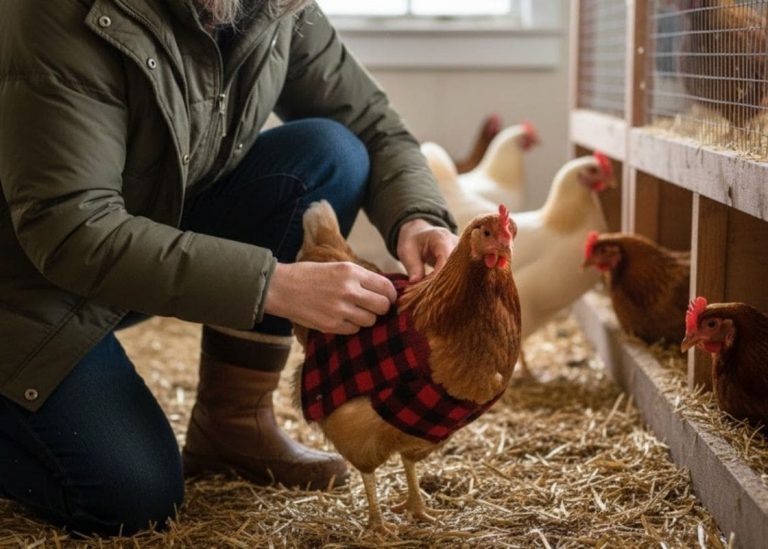
If you read my story about sewing sweaters for my chickens, you already know how that experiment ended. It came from love, but it was the wrong solution. Still, that did not mean the problem went away.
The Winters That Left a Mark on Me
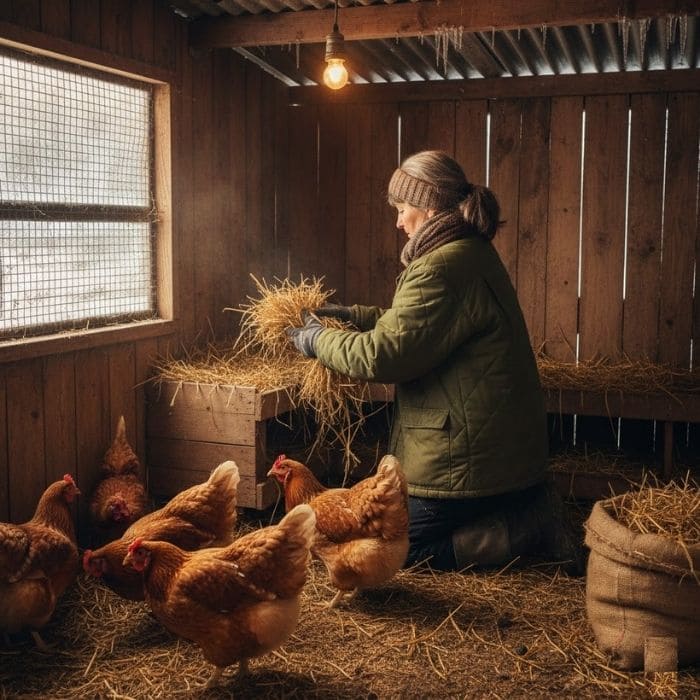
Before I found what truly worked, I tried almost everything people recommend. I deepened bedding until the coop floor felt like a mattress.
Additionally, I blocked every visible draft and added extra straw. Then I adjusted ventilation again and again, trying to balance airflow with warmth.
I also increased feed at night so birds could generate more body heat. I even rearranged roosts so they could huddle closer together.
All of these things helped, but none of them solved the hardest nights.
Every winter, despite my efforts, I would lose one or two birds. Sometimes old ones, sometimes weaker ones, and sometimes birds that seemed fine the day before. Each loss stayed with me, because I always felt that maybe, just maybe, I could have done more.
The Conversation That Changed Everything
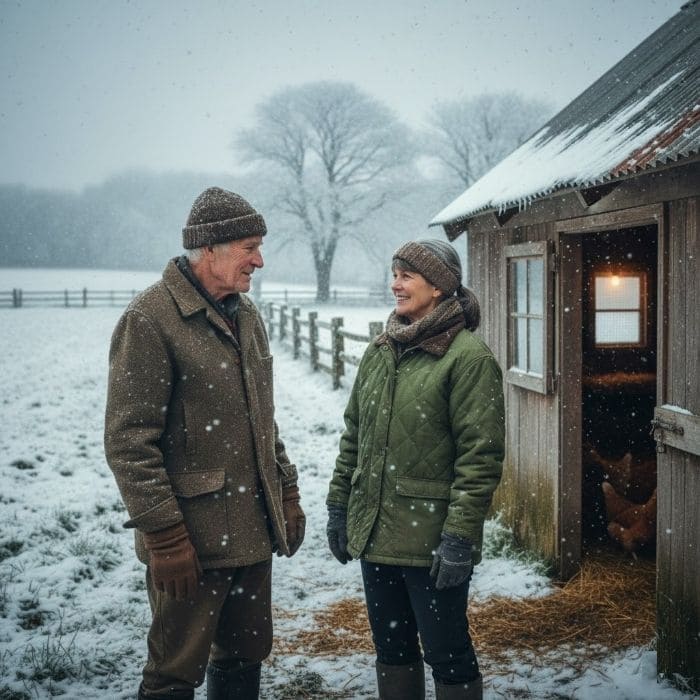
Last winter, after one particularly cold stretch, I ran into John, a man who lives in my village and keeps a small flock behind his house. He is not flashy, not loud about his methods, but his birds always look calm and steady.
We talked about the cold, about losses, about how unpredictable winter has become. Then he said something simple that stopped me.
“I stopped losing birds when I started using heating pads.”
John explained that heating pads do not try to warm the entire coop and dry the air or create fire risk the way lamps can. They provide localized, gentle warmth that chickens can choose to use or ignore.
Buying My First Heating Pads
A few days later, I drove to a farm supply store about forty minutes from my place, one I trust because the staff actually use what they sell. Inside, I found several types of heating pads designed specifically for animals.
There were three main sizes. Small pads meant for single birds or recovery situations, medium pads designed for small coops or corners and large pads intended for livestock shelters.
I stood there longer than I expected, thinking through my setup.
For my Hubbard chicken coop, which houses about 50 birds, I chose two medium-sized heating pads. They were flat, sealed, waterproof, and designed to stay at a low, steady temperature rather than heating aggressively.
The Installation That Tested My Patience
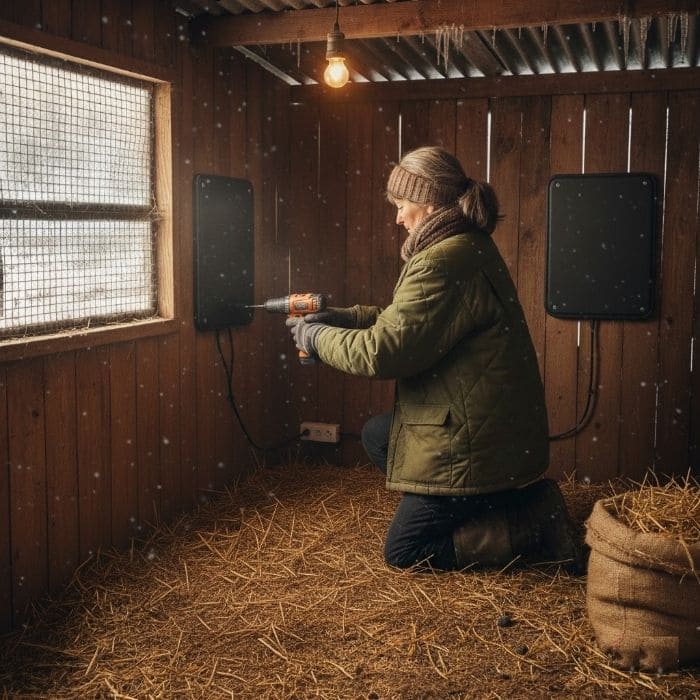
Installing them was harder than I expected. I did not want them on the floor where moisture could collect, and I did not want them too high either. I tried mounting them along the wall near roost height, but the angle felt wrong.
After an hour of adjusting and second-guessing, I called the store. They walked me through it patiently.
I had to mount the pads vertically, not flat, secure them firmly against the wall, then place them where birds naturally rest, not where they sleep directly on top of them.
Finally, I just let chickens lean against warmth rather than sit on it. Once I followed that advice, everything clicked.
The First Night I Slept Better
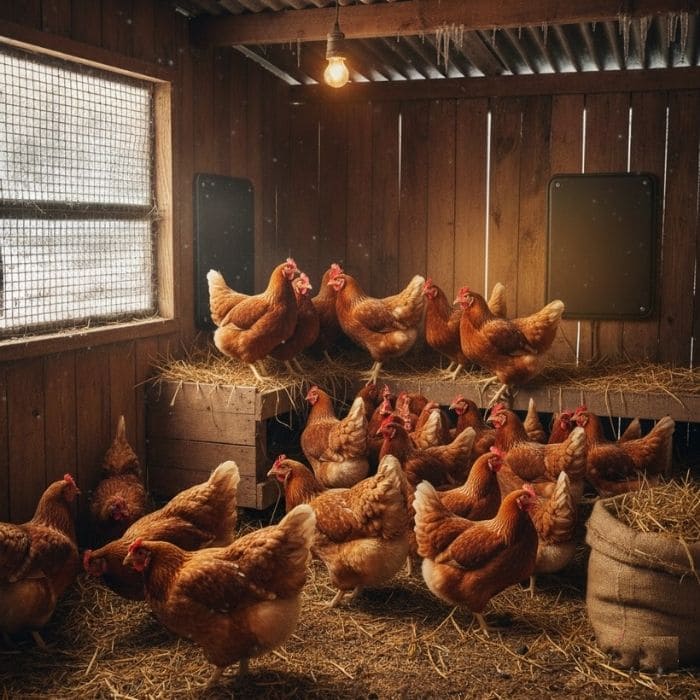
That first night with heating pads installed, the temperature dropped into the low teens again. I checked the coop twice, once before dark and once after.
Chickens clustered nearby, not piled, not frantic. Some leaned against the warm surface, while others stayed farther away.
The next morning, everyone was alive and moved normally.
Over the following weeks, I noticed changes. Birds recovered faster from cold nights. Older hens rested more comfortably. By the end of winter, I was convinced.
How Many Heating Pads I Use Now
For winter, I plan heating pads the same way I plan feed. Based on flock size and coop layout.
- For 50 Hubbard chickens, I use two medium heating pads
- For smaller coops, I use one medium or one large pad, depending on space
- For recovery or isolation areas, I keep small pads ready
Across my entire farm, winter means multiple heating pads, each placed intentionally, never overcrowded, never relied on as the only solution, but always present.