My Secret Method When Marek’s Disease Frightened
Two years ago, fear settled over the Midwest in a way that felt slow at first and then suddenly unavoidable. News about Marek’s Disease Virus (MDV) began appearing in conversations long before it appeared clearly in print. At first, it was just farmers talking in low voices at feed stores, asking careful questions and sharing…
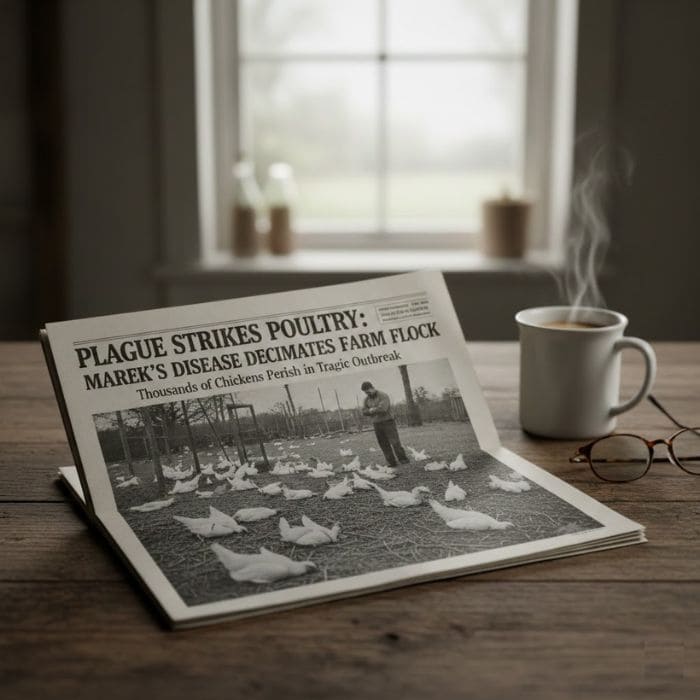
Two years ago, fear settled over the Midwest in a way that felt slow at first and then suddenly unavoidable. News about Marek’s Disease Virus (MDV) began appearing in conversations long before it appeared clearly in print.
At first, it was just farmers talking in low voices at feed stores, asking careful questions and sharing half-confirmed stories. Then the numbers came.
I still remember reading an article in The Columbus Dispatch one morning while my coffee cooled beside me. The headline talked about thousands of chickens lost across several Midwestern states, entire flocks collapsing within weeks.
The article described symptoms in blunt detail: paralysis starting in one leg, wings dragging, twisted necks, birds unable to reach feed or water, then sudden death.
It said plainly that once symptoms appeared, there was rarely a recovery. After that, nobody in my village treated the topic lightly.
When the Threat Reached My Gate
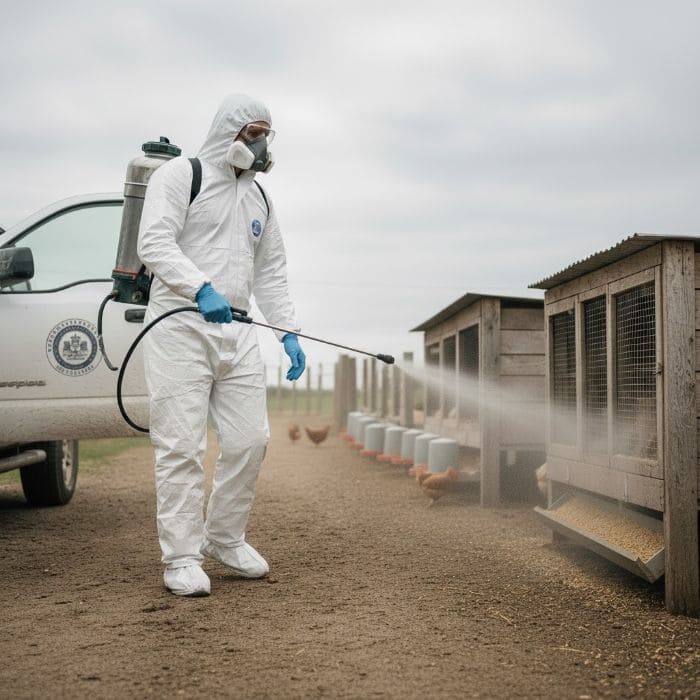
Not long after those reports, the situation became real on my own land. An agricultural worker arrived as part of a regional prevention effort, stepping out of his truck already dressed in protective gear.
Mask, gloves, boot covers, sprayer strapped across his back. Seeing someone walk across my farm dressed like that shifted something in my chest.
He sprayed entrances, pathways, high-traffic areas near feeders and waterers, explaining how MDV could persist in dust and soil for months, sometimes years.
He had already seen what this virus could do. That evening, after he left, I walked through my coops more slowly than usual. Everything looked normal, but I understood how fragile that normality could be.
I Believe My Flock Stayed Healthy
My flock never showed symptoms. Not one bird limped, collapsed, or withdrew. Egg production stayed steady and appetite never dipped.
I don’t believe that was luck as it was preparation, even if I hadn’t called it that at the time.
For years, I had been quietly building immune resilience without labeling it as disease prevention. When MDV arrived in conversations and headlines, I leaned harder into habits that were already part of my daily rhythm.
The Herb Beds That Became My First Line of Defense
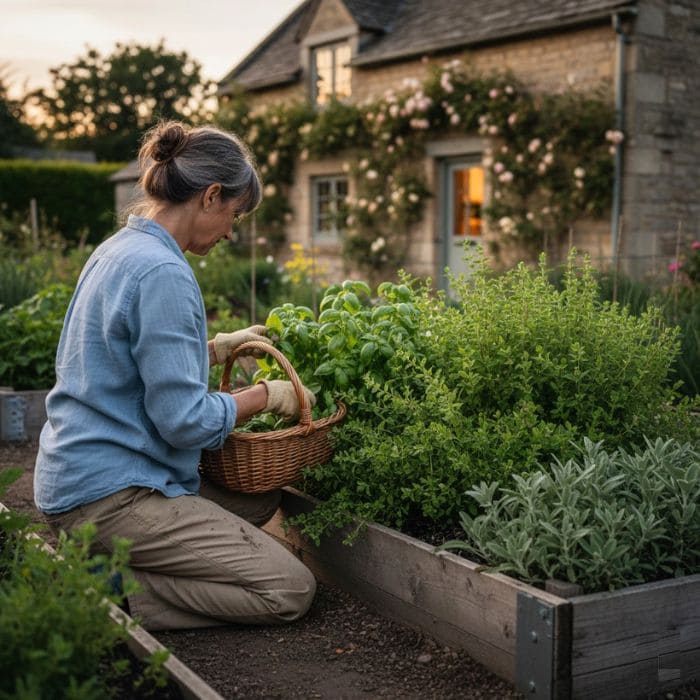
Behind my cottage, I maintain several raised garden beds. Oregano grows thick and fast there, spreading happily if you let it. Basil fills an entire bed each summer, broad-leafed and fragrant. Sage grows slower, woody and steady, surviving cold better than most plants.
When MDV fear peaked, I began harvesting intentionally.
Fresh Herbs in Drinking Water
Oregano contains natural compounds like carvacrol and thymol, known for supporting immune response and discouraging harmful bacteria. Basil supports digestion and reduces stress, which becomes critical when birds sense environmental changes.
Also, sage offers respiratory support and mild antimicrobial properties, especially useful during dusty or dry periods.
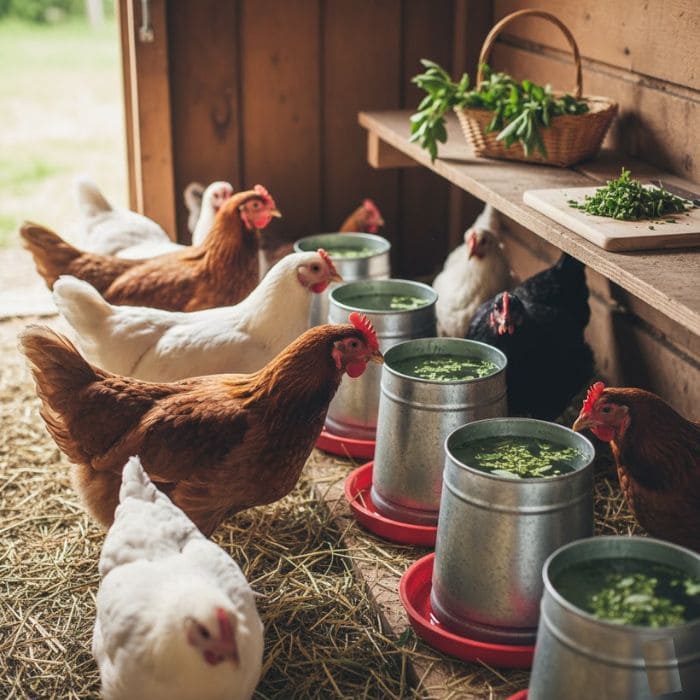
Several times each week, I harvested roughly two full cups of mixed fresh herbs, usually weighted toward oregano, with basil and sage rounding it out.
I washed them carefully, then chopped them very finely, almost to a paste because chickens are surprisingly sensitive to texture, and large pieces get ignored or wasted.
I added the herbs directly to their waterers, letting them steep lightly. The water took on a faint green tint and a clean, herbal scent that never overwhelmed. I refreshed it daily to keep everything clean.
The flock accepted the water easily, which mattered more than any theory. No hesitation, no refusal, just normal drinking behavior.
Herbs in Nesting Areas
At night, I sometimes sprinkled a small amount of the finely chopped herb mixture into nesting boxes, not enough to replace bedding, just enough to lightly scent the space.
Hens settled in comfortably, and I liked knowing their bodies were supported during egg production, which is already a physically demanding process.
The Second Layer of Protection: Dried Herbs in the Coop
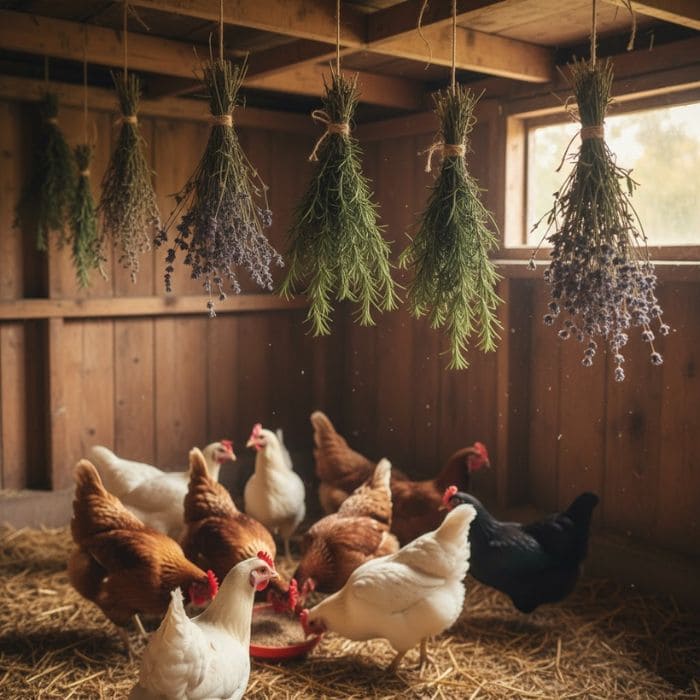
Depending on what my garden offered, I also harvested lavender and rosemary, drying them slowly in bundles hung in a shaded, well-ventilated space.
Once completely dry, I tied them into small bunches and hung them inside the coops, always out of pecking reach and away from direct drafts.
Lavender helped keep the environment calm, which matters during stressful periods. Stress weakens immune systems faster than people realize. Rosemary provided natural antimicrobial support and helped freshen the air without artificial scents.
The smell inside the coop became quietly herbal, never sharp or distracting. The birds barely reacted, which told me it was gentle enough to belong.
What I Watched Instead of Waiting for Symptoms
While others waited anxiously for signs of illness, I watched fundamentals.
Feed consumption stayed consistent and movement remained balanced. Birds continued dust bathing, perching, and socializing normally.
Plus, egg production didn’t fluctuate, and shells stayed strong.
I Still Do This Today
When the MDV scare faded from headlines, I didn’t stop these practices. I still rotate fresh herbs into water several times a week and hang dried bundles when I have them.
They work because they exist alongside clean coops, dry bedding, proper ventilation, balanced nutrition, enough space, and calm routines.