The Simple Thing I Use to Keep My Sweater Chickens’ Feathers Soft
If you have followed my stories for a while, you already know that Sweater chickens hold a special place on my farm. I do not raise them for eggs, and I do not raise them for meat. I raise them for their feathers, for the way they move through a space, and for the quiet…
If you have followed my stories for a while, you already know that Sweater chickens hold a special place on my farm.
I do not raise them for eggs, and I do not raise them for meat. I raise them for their feathers, for the way they move through a space, and for the quiet beauty they bring into my days.
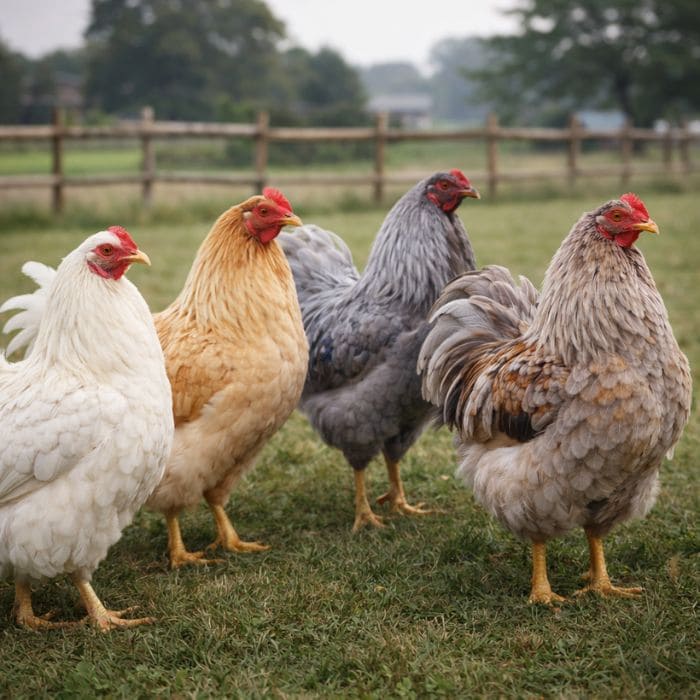
Their feathers are not ordinary. A healthy Sweater chicken carries layers of plumage that can reach 8 to 12 centimeters in length, depending on the area of the body.
The feathers are dense, plush, and slightly curled at the ends, creating a soft, rounded silhouette. Colors vary across my flock, from creamy whites and warm buffs to silvery grays and muted browns, sometimes even blending several shades in a single bird.
When you run your fingers gently through their feathers, they feel almost like well-worn wool, springy, warm, and surprisingly clean when properly cared for.
Because of this, I watch feather conditions as closely as other farmers watch egg counts.
Why Feather Care Is Essential for Sweater Chickens
With Sweater chickens, feathers tell the story first. When something is off, dryness shows at the tips, feathers lose their flexibility, and texture becomes brittle. During seasonal changes or molting, this happens quickly if you are not paying attention.
Feather care on my farm is not cosmetic, it is preventative. Healthy feathers protect skin, regulate temperature, and reflect the overall balance of the bird. When feathers thrive, everything else usually follows.
How My Grandmother Gave Me the Idea Without Knowing It
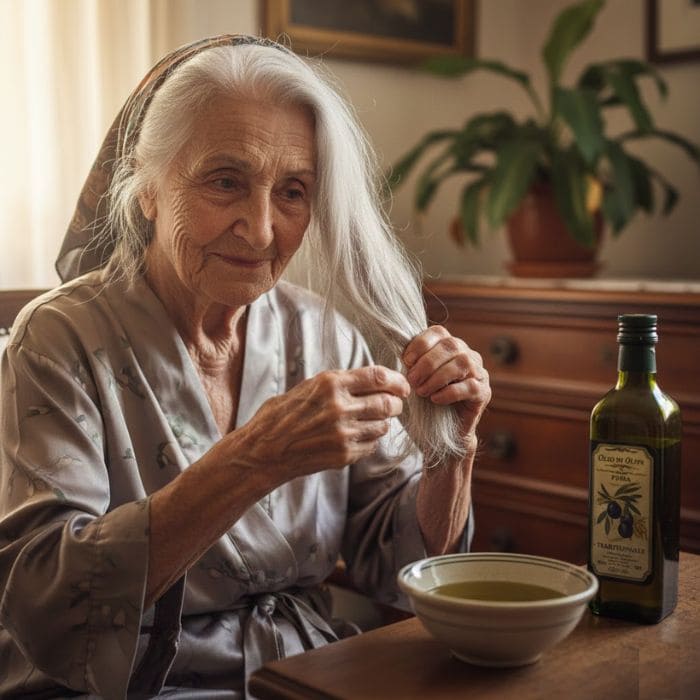
The idea to use olive oil did not come from a book or a farm supply catalog. It came from memory.
When I was young, I used to watch my grandmother in the mornings, standing near the window, smoothing a few drops of olive oil into her hair. She believed in keeping things simple, natural, and consistent. No perfumes, no harsh treatments, just care repeated gently over time.
Years later, while standing in the coop and running my fingers through dry Sweater feathers during a windy autumn, that image came back to me.
I thought that feathers, like hair, are made of protein, exposed to weather, friction, and dryness. They needed moisture, not coating.
Why Olive Oil Works So Well
I chose olive oil because it is natural, edible, and gentle. It contains vitamin E, antioxidants, and healthy fats that support skin and feather shafts without clogging or hardening. Unlike fast-drying oils, olive oil absorbs slowly, softening rather than sealing.
If a chicken preens after application, there is no risk. Everything about it felt right for an animal that cleans itself with its beak.
I never use scented oils, essential oils, or processed blends. Just plain, good-quality olive oil.
How I Use Olive Oil on My Sweater Chickens
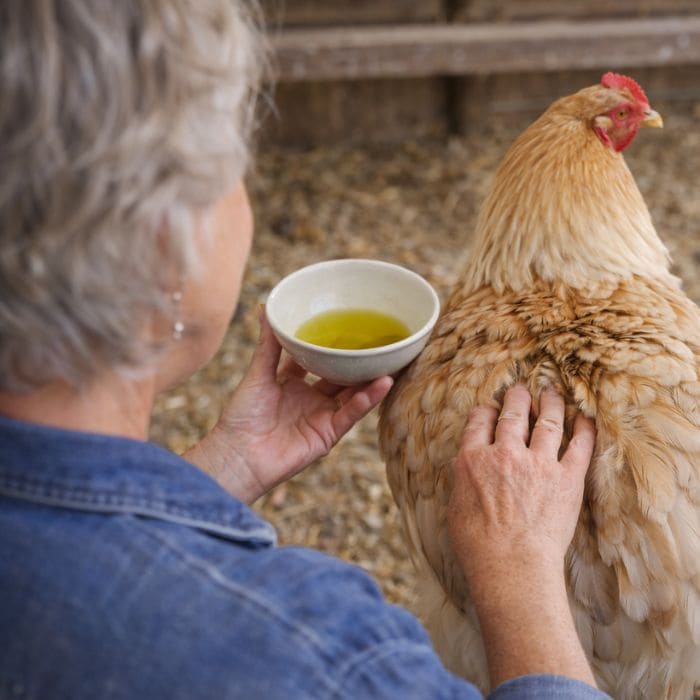
I keep the process simple and calm. I pour about one tablespoon of olive oil into a shallow bowl and warm it slightly with my fingers. Cold oil feels unnatural, and chickens notice that immediately.
Using my fingertips, I apply a very small amount to targeted areas, never the entire bird. I focus on the base of the feathers near the skin, especially along the back, sides, and areas that rub against roosts. I avoid wings and tail feathers unless they show clear dryness.
After application, the chickens preen naturally, spreading the oil further on their own. If they stop preening quickly, I know I used too much.
Note:
I never apply olive oil to wet feathers. I avoid using it during extreme cold, when oil could trap moisture. I never force a bird that resists handling.
Also, I usually do this in the late morning, when the coop is warm and the birds are relaxed.
Using Olive Oil During Molting Season
Molting leaves Sweater chickens vulnerable. Feathers drop unevenly. Skin becomes exposed. New pin feathers emerge, tender and easily damaged. Last fall, my Sweater flock entered a heavier molt than usual, and dry winds made everything worse.
During that time, I applied olive oil once a week, never more. I focused only on exposed skin and surrounding areas where pin feathers were emerging, always avoiding direct pressure on the pins themselves.
Within days, I noticed changes. Skin looked calmer and hydrated, new feathers emerged cleaner, with smoother shafts and better color consistency.
The birds scratched less and preened more calmly. By the end of molting, their feathers grew back fuller, softer, and more even than in previous years.