Easter Has Never Cost Me Much Thanks to the Eggs on My Farm
Every year, as Easter approaches, I watch the same pattern unfold. Decorations begin appearing earlier than necessary, prices quietly climb, and suddenly even the simplest seasonal items feel inflated. Artificial eggs wrapped in pastel packaging, pre-painted ornaments that all look the same, decorations meant to be used once and then forgotten. I notice it all,…
Every year, as Easter approaches, I watch the same pattern unfold. Decorations begin appearing earlier than necessary, prices quietly climb, and suddenly even the simplest seasonal items feel inflated.
Artificial eggs wrapped in pastel packaging, pre-painted ornaments that all look the same, decorations meant to be used once and then forgotten. I notice it all, but I’ve never felt pulled into it.
I have never used fake eggs to decorate for Easter, not even once, and it isn’t because I am especially careful with money. It is because my farm already gives me what I need, quietly and consistently, long before the holiday arrives.
When Eggs Are Already Part of Everyday Life
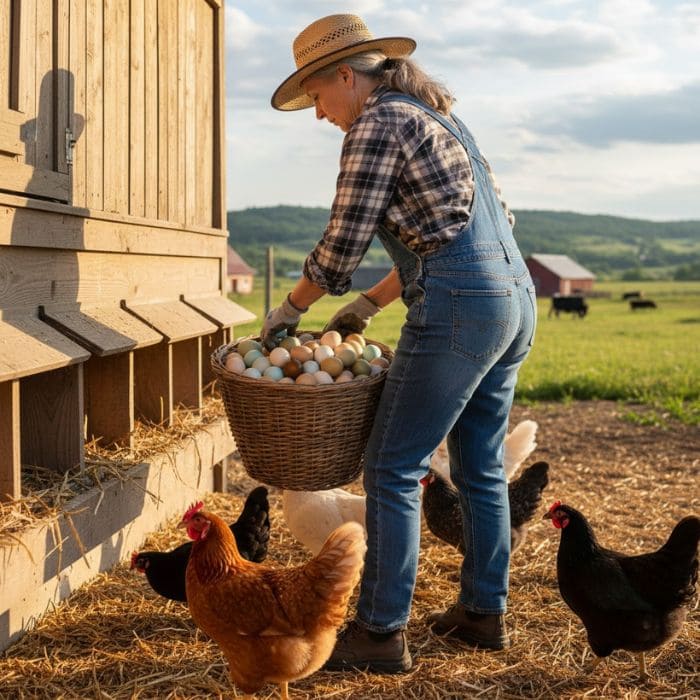
By the time Easter appears on the calendar, eggs are already woven into my daily routine.
Leghorns laying steadily, Rhode Island Reds adding their warm brown shells, Hy-Lines filling baskets with reliable consistency. Eggs stack up naturally, collected with the same care I give them year-round.
I don’t go looking for decorations when Easter comes, I walk to the coop.
Real eggs have presence. They vary slightly in size and shape. Some shells are smooth and bright, others creamy or speckled, some carrying a depth of color that no plastic imitation ever manages to capture.
Holding them in my hands, I can feel their weight, their fragility, and their connection to the birds that laid them.
I Always Boil Before I Paint
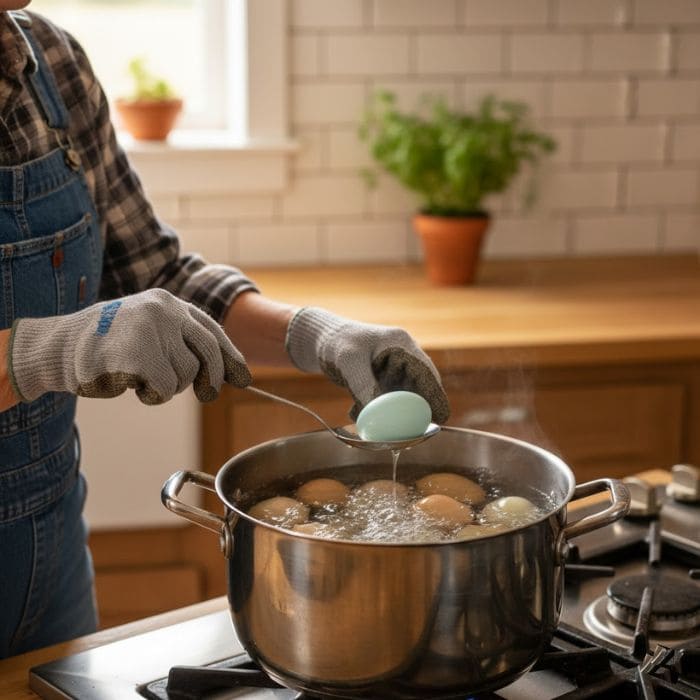
I always boil my eggs before painting, and I do it for a very practical reason. Boiled eggs last longer, handle better, and allow me to enjoy the decorations without worry.
I don’t rush this step, because how the egg is cooked affects everything that comes after.
I bring the eggs to room temperature first, then lower them gently into simmering water rather than boiling aggressively.
I let them cook fully, then cool them slowly in cold water before drying them completely. Once dry, the shells are stronger, more stable, and ready to be handled without fear of cracking.
This small step means the eggs can sit out for days without issue, allowing Easter to feel relaxed instead of rushed.
Painting Eggs as a Quiet Ritual
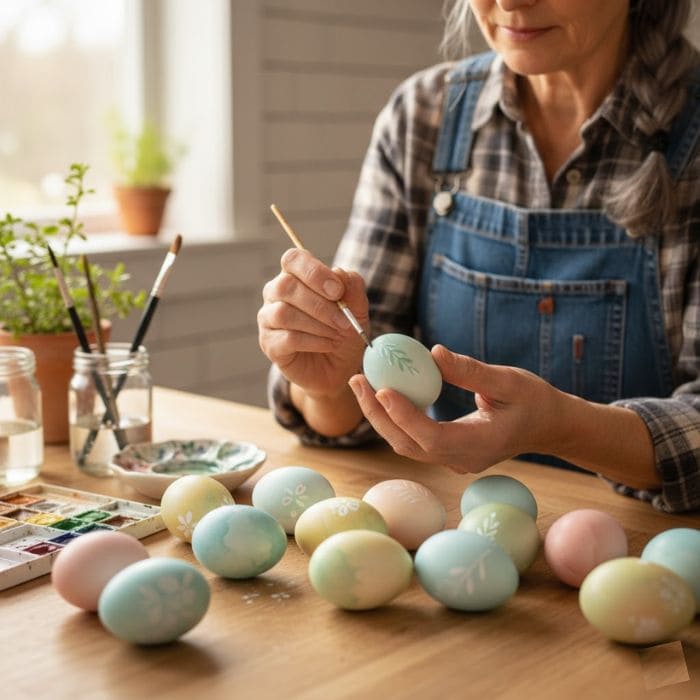
Painting eggs has always been part of Easter for me, not as a performance, but as a ritual that slows time just enough to feel the season changing.
I don’t use commercial dye kits. I never liked the harsh colors or chemical smell, and they always felt disconnected from the land around me.
Instead, I use watercolor paints or very lightly diluted acrylics, mixed so the shell still shows through.
I hold each egg carefully, turning it slowly, letting the brush follow the curve rather than forcing a design. Soft blues, muted greens, pale yellows, dusty pinks. Colors that belong to spring fields and early mornings, not store aisles.
Sometimes I paint simple patterns, thin lines, dots, or leaf shapes inspired by what is growing outside.
Other times, I let the paint settle naturally, allowing imperfections to become part of the design. No two eggs ever look the same, and that variation is what makes them beautiful.
What I’ve Learned From Doing This Every Year
Real eggs demand patience, and patience always shows in the final result.
I never overcrowd them while drying, and I always use thin layers of paint rather than trying to cover everything at once. Thick paint hides the shell’s natural texture, while thin layers let the egg remain itself.
Once the paint has fully dried, I rub each egg gently with a drop of olive oil. This brings out the color, adds a soft sheen, and helps protect the shell from drying out. The eggs glow slightly in the light, not shiny, just alive.
I also leave some eggs completely plain, because contrast matters. Decorated eggs look even more beautiful when placed next to natural ones.
How I Use the Eggs Around My Home and Farm
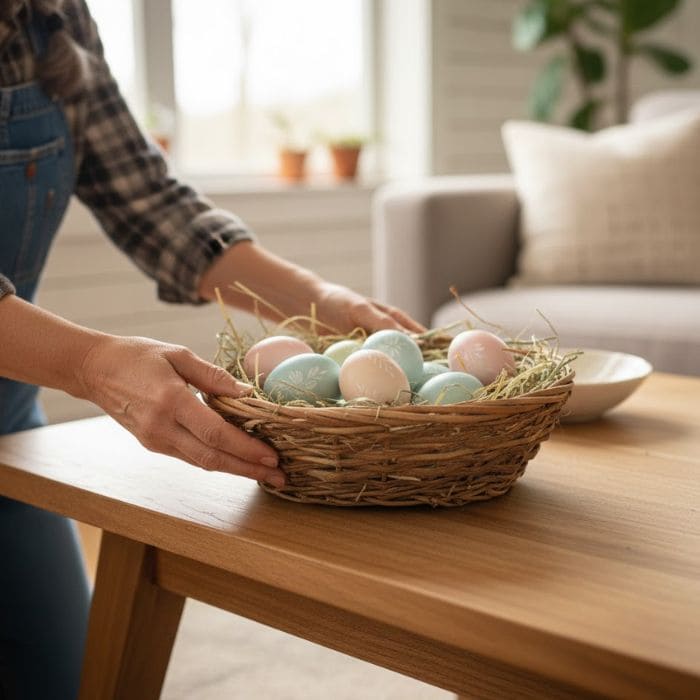
Once painted, the eggs find their way into simple spaces. Shallow bowls on the table, straw-filled baskets near windows, small groupings on the porch where afternoon light catches them.
Sometimes I place a few near the coops themselves, a quiet acknowledgment of where they came from.
When Easter passes, nothing feels wasted. Boiled eggs get eaten gradually. Shells return to the compost. Paint washes out of brushes. The ritual ends, but nothing is discarded thoughtlessly.