I Decided to Play Music for My Chickens
I had heard the idea many times before I ever tried it myself. Farmers in different parts of the world let their cows listen to music every day, and they talk about calmer animals, better health, and even improvements in production quality. Closer to home, about ten kilometers from my farm, there is Mr. Bill,…
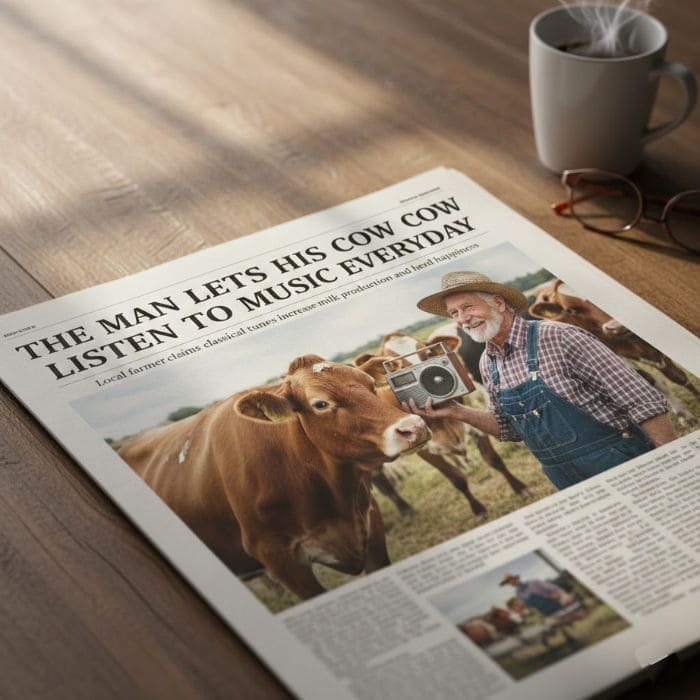
I had heard the idea many times before I ever tried it myself. Farmers in different parts of the world let their cows listen to music every day, and they talk about calmer animals, better health, and even improvements in production quality.
Closer to home, about ten kilometers from my farm, there is Mr. Bill, an experienced farmer that many people here respect.
Years ago, he appeared on the local news, standing in muddy boots beside his animals, smiling slightly when the reporter asked why he played music in the fields.
I still remember one line from that interview because it sounded simple and strange at the same time:
“…Animals don’t understand words, but they understand the atmosphere. Sound is part of that atmosphere.”
He never mentioned what kind of music he used. He only said consistency mattered more than people expected.
Last month, I finally decided to try.
Setting Up Music on a Large Chicken Farm
Because my chicken area covers more than one hectare, I knew this could not be a casual experiment. One speaker by the coop would never reach the full space.
I drove to the local market that same week and bought six weather-resistant outdoor speakers, not expensive ones, just reliable, meant to handle dust and light rain. Each one was rated at about 30 watts, more than enough if used gently.
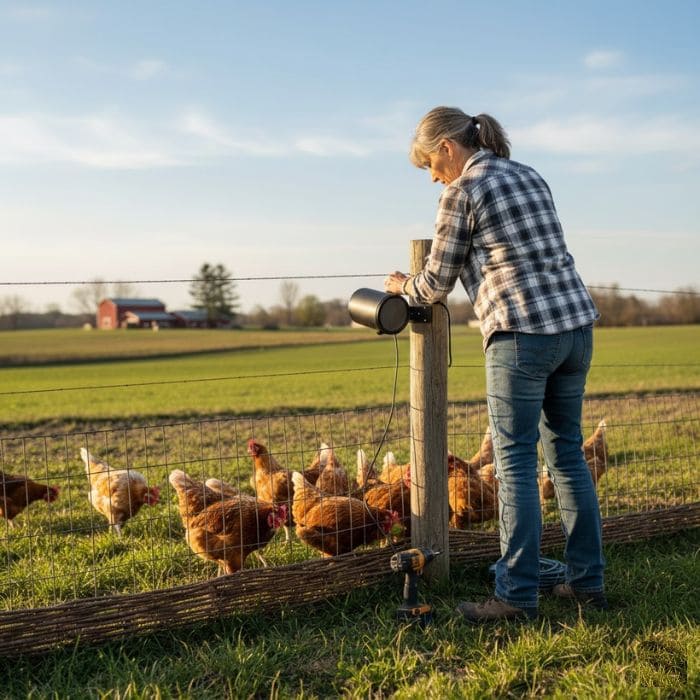
Back on the farm, I mounted the speakers around the perimeter, roughly evenly spaced, each one fixed higher than a chicken could reach, angled slightly downward and inward. I wanted the sound to fall into the space, not echo across the fields. I connected them to a simple amplifier with a timer and tested the volume carefully.
The rule I set for myself was simple: if I could clearly hear the music from the cottage, it was too loud. The final setting was low enough that the sound blended with wind and birdsong instead of competing with it.
This part took almost an entire afternoon, and by the time I finished, I realized I was already paying more attention to sound than I ever had before.
My First Try and a Very Clear Failure
Choosing music was harder than installing the system. Mr. Bill never said what he played, and at first I trusted my own taste.
I admire Guns N’ Roses, and I convinced myself that strong rhythm and energy might make the flock more active and confident. I imagined lively movement, strong appetite, and bold birds.
What actually happened was uncomfortable to watch.
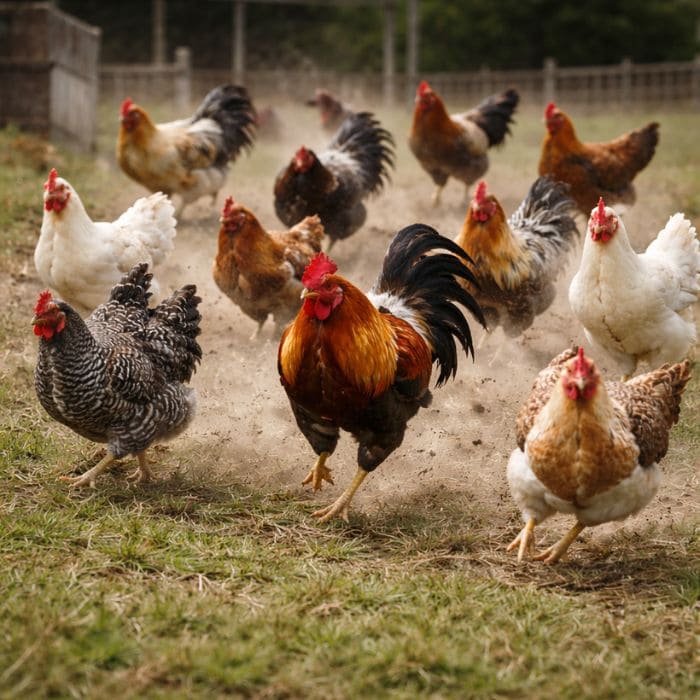
Within minutes, the Leghorns reacted first. They became restless, moving faster than usual, darting instead of walking, calling out more sharply. A few began chasing without reason.
The Rhode Island Reds tolerated it better, but even they shifted uneasily and stayed closer together than normal.
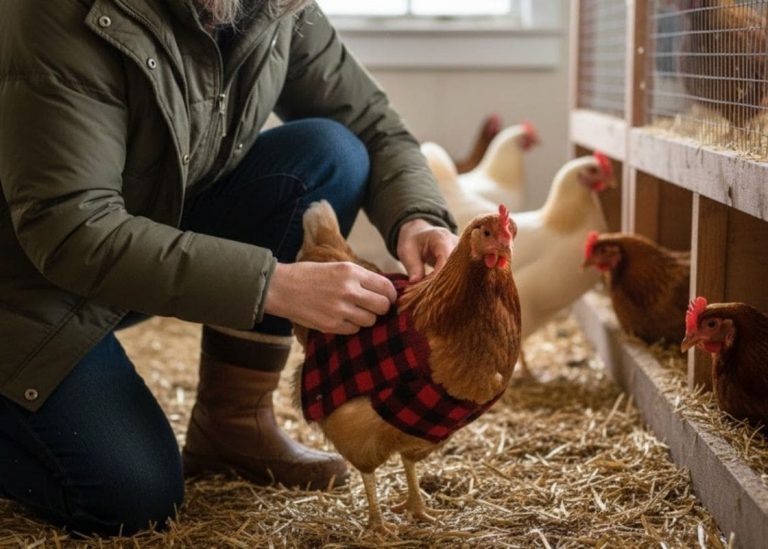
And the Sweater chickens reacted the worst. They withdrew, moved away from open areas, and clearly avoided the direction of the sound.
Egg collection that day was harder. The flock felt scattered, alert in the wrong way, and by evening, roosting was noisy and unsettled.
By the second day, I turned the music off. That experiment ended quickly, and I wrote one clear note in my journal: energy does not equal comfort.
The Second Try and What I Changed
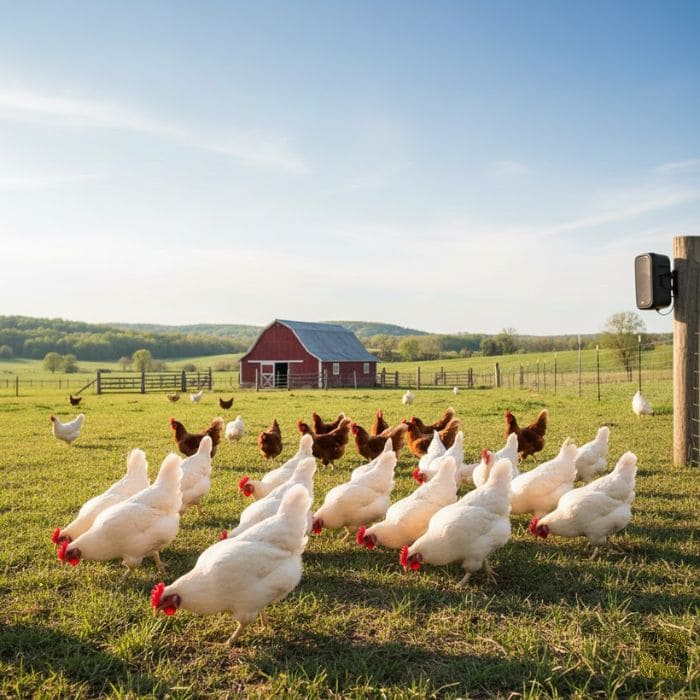
A few days later, I tried again, this time with a very different approach. I chose classical music, starting with Mozart and later Beethoven.
I lowered the volume even more than before and limited playback to two periods, late morning and early evening, never during feeding or egg collection.
This time, I stayed with the flock instead of watching from a distance. The change was not dramatic, but it was steady. Movements slowed.
The Leghorns spread out instead of clumping. The Rhode Island Reds resumed their usual calm patrol of the space. The Sweater chickens did not withdraw at all. Juniper stayed exactly where she liked to rest, feathers relaxed, posture loose.
Roosting became quieter, and the sharp, sudden noises I often hear at dusk faded into something softer.
A Clear Warning I Should Say Out Loud
I will say this clearly, and I say it with a bit of humor but also seriousness. Do not play loud, fast, aggressive sounds for your chickens, and absolutely do not experiment with advertising clips from KFC or sudden human voices.
Sharp changes in sound can stress a flock quickly, and stressed chickens become aggressive. If someone tries that after reading this and chaos follows, I am not responsible, haha.
After One Month, What I Actually See
After trying this for a full month, I will be honest. I do not see dramatic results that can be measured with numbers. Egg count is stable and feed consumption is unchanged.
What I do see is quieter evenings. The flock settles more smoothly. Sleep feels deeper, with fewer startled movements and less noise after dark. The chickens seem more relaxed, especially during rest, and that alone feels meaningful to me.
Just like everything else on my farm, music is not a tool for productivity. It is part of the atmosphere. I do not know if I will keep it forever, but for now, it belongs here, played softly, without urgency, the same way I try to live.