My Chickens Really Love Refrigerated Watermelon
Have you ever stood outside on a summer morning and noticed that even your chickens seem tired of breathing, as if the heat itself has become something heavy they have to carry? Summer in North Hollow can be relentless. When heat arrives here, it doesn’t show up politely and disappear by evening. It settles in,…
Have you ever stood outside on a summer morning and noticed that even your chickens seem tired of breathing, as if the heat itself has become something heavy they have to carry?
Summer in North Hollow can be relentless. When heat arrives here, it doesn’t show up politely and disappear by evening. It settles in, day after day, pressing down on the land, drying the soil, thickening the air, and slowly changing the way everything moves.
My flock feels it immediately. Chickens that are usually alert and curious begin seeking shade as soon as they step outside.
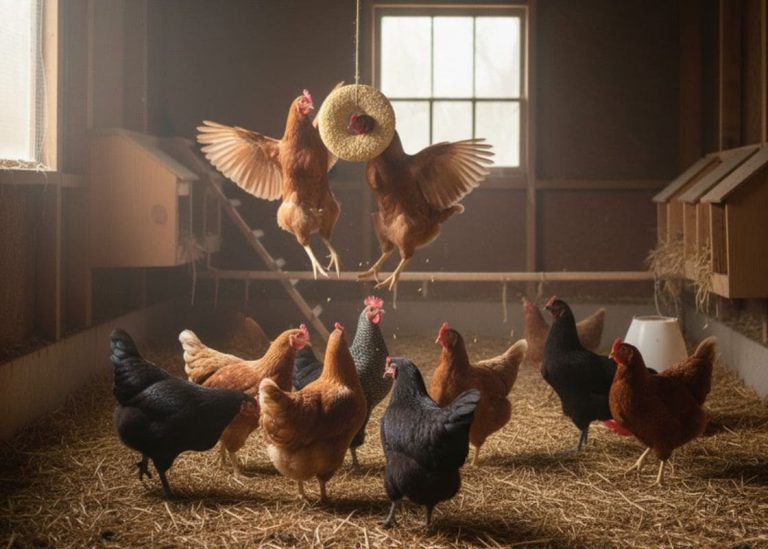
Also, wings lift slightly away from bodies to release heat. Beaks stay open longer than normal. Egg production drops, and small irritations turn into short tempers.
The Summer That Changed How I Care for My Flock
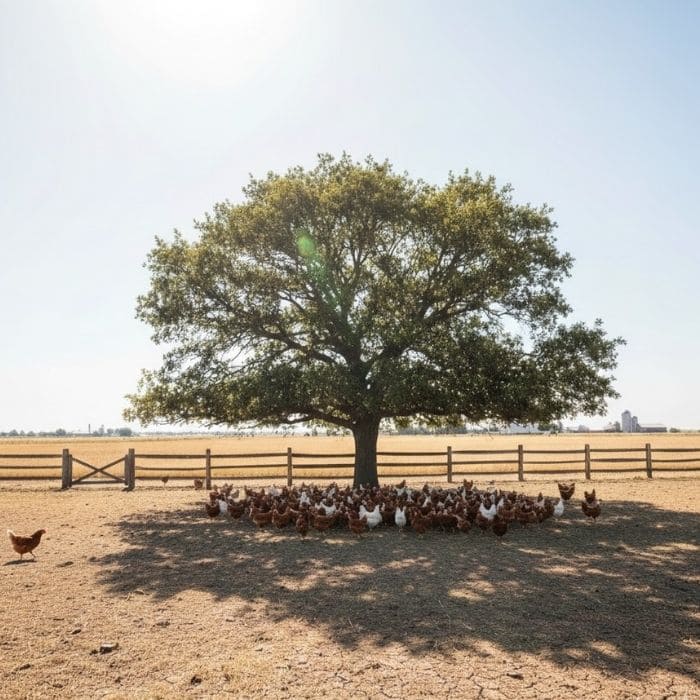
I learned that lesson the hard way in 2022, a summer my village still remembers clearly. That year, North Hollow went through an extended heat wave that pushed daytime temperatures into the mid to high 90s°F, with several days climbing past 100°F once humidity was factored in.
Nights offered almost no relief. The air stayed heavy, and the ground seemed to hold onto heat like something it refused to let go of.
I adjusted routines as much as I could. I added extra water stations, moved feeding times earlier into the morning, and checked shaded areas repeatedly throughout the day.
Even with those changes, the heat wore my birds down faster than I expected. But by the end of that summer, I lost three chickens.
They didn’t collapse suddenly or dramatically. They faded, appetite slowed, and movement weakened until their bodies simply couldn’t recover.
Losing them that way stays with you, because it feels preventable even when you believed you were doing everything right at the time.
Why Cooling Matters More Than Shade Alone
Chickens don’t sweat the way we do. Their bodies rely on airflow, hydration, and behavior to regulate temperature, and when heat becomes constant instead of temporary, those systems struggle to keep up. Whereas, their bodies work harder just to survive, leaving little energy for immunity, digestion, or egg production.
Water alone isn’t enough. Chickens will drink, but warm water doesn’t lower body temperature. Shade helps, but still air traps heat underneath it.
I realized they needed something that worked from the inside out, something that actively helped their bodies cool instead of just endure.
That’s when refrigerated watermelon became part of my summer routine.
Why Refrigerated Watermelon Works So Well
On my farm, watermelon is not just a treat. It’s hydration, cooling, and gentle nutrition combined into something chickens instinctively want.
Watermelon is more than 90 percent water, which helps replenish fluids quickly. It contains natural sugars that restore energy without stressing digestion, and it’s soft enough for birds already weakened by heat.
Most importantly, when served cold, it helps lower body temperature gradually and safely rather than shocking the system.
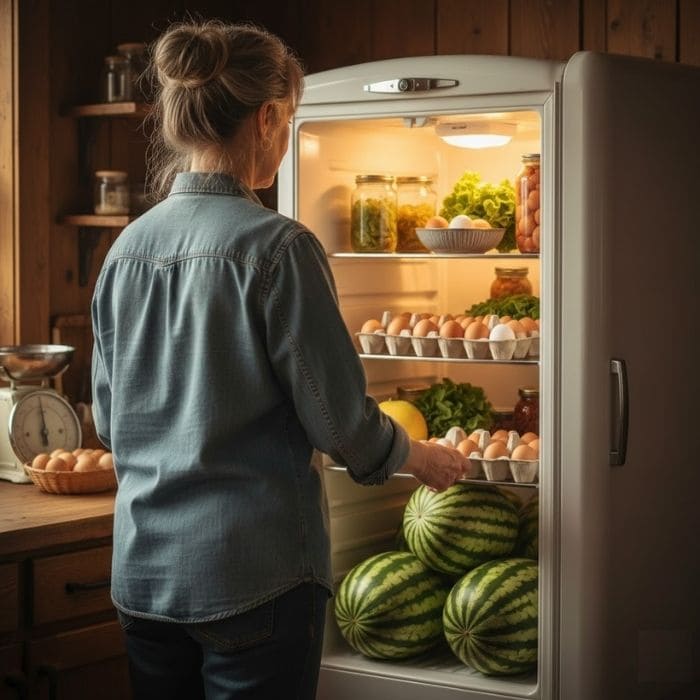
I refrigerate whole watermelons overnight and cut them into large wedges in the morning. I never chop them too small, because the goal isn’t speed or competition.
How I Serve Watermelon During Heat Waves
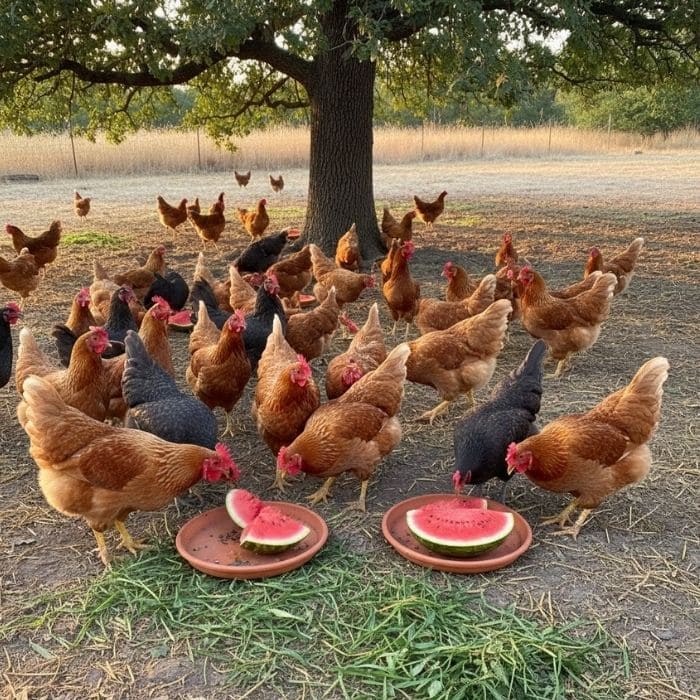
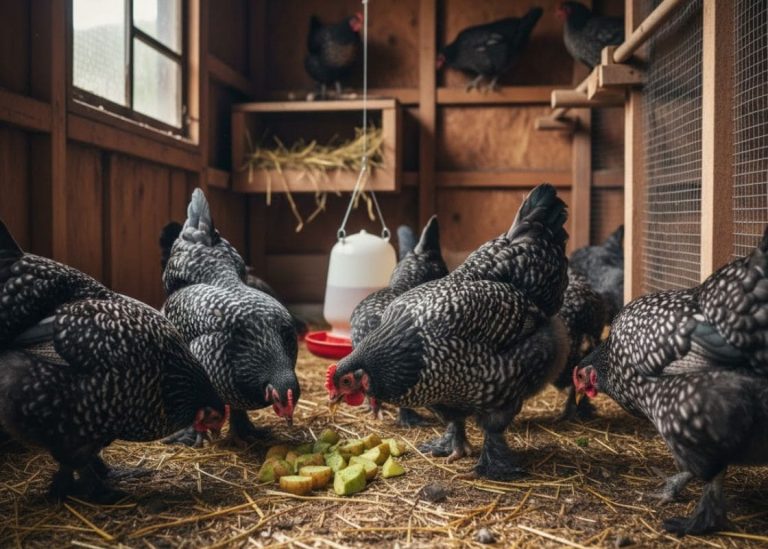
I don’t put watermelon in feeders. Instead, I place it directly on shaded ground or in wide, shallow trays where birds can gather without crowding or fighting.
I offer it during the hottest part of the day, usually late morning or early afternoon, when heat stress begins to peak.
The reaction is always the same. Chickens approach cautiously at first, then peck, pause, and peck again. Within minutes, the frantic edge of heat begins to soften.
Birds stand still longer. Wings settle back against bodies. And breathing slows. The yard grows quieter, not because the flock is inactive, but because they are finally comfortable again.
Watching Juniper and Old Maple Enjoy the Relief
Juniper always understands immediately what the watermelon means.
She approaches deliberately, lowers her beak, and takes small, careful bites, pausing between them as if she’s aware of the cooling effect. Her feathers settle, her posture relaxes, and she often remains nearby afterward, resting quietly in the shade rather than rushing back into activity.
Old Maple responds differently. She eats with gentle enthusiasm, then steps back and closes her eyes for a moment, standing completely still as if the world has finally slowed to a manageable pace.
For a hen who has lived through many seasons, that moment of relief feels especially meaningful to watch.
What Changed Once I Made This a Habit
Since I began offering refrigerated watermelon consistently every summer, the difference has been clear.
Birds recover faster after hot mornings. Egg production doesn’t dip as sharply during heat waves. Movement remains steadier throughout the day, and behavior stays calmer even when temperatures climb.
Most importantly, I haven’t lost a single bird to heat stress since making cooling a priority rather than an afterthought.
Watermelon doesn’t replace shade, ventilation, or clean water. It supports them and gives the body a chance to reset instead of constantly fighting the environment.