Should Chickens Wear Sweaters in Cold Weather?
Two winters ago, North Hollow delivered one of those cold spells that makes you question every life choice you’ve ever made. The temperature dropped hard and fast, with nights sinking well below freezing and daytime highs struggling to climb out of the teens. The wind came down from the plateau like it had something personal…
Two winters ago, North Hollow delivered one of those cold spells that makes you question every life choice you’ve ever made.
The temperature dropped hard and fast, with nights sinking well below freezing and daytime highs struggling to climb out of the teens. The wind came down from the plateau like it had something personal against us, cutting through trees, fences, and jackets alike.
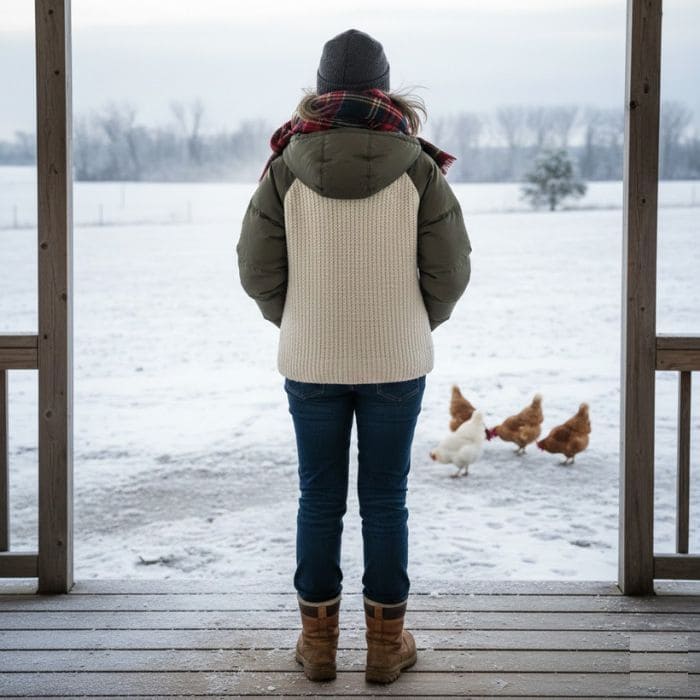
I stood on the porch one morning, layered in everything I owned.
A wool sweater under a puffer jacket. Thick socks stuffed into boots. A scarf wrapped high enough to brush my cheeks. A beanie pulled down until my ears ached. Even with all that, the cold found me.
And as I watched my chickens move slowly across frost-stiff ground, a very human thought took over: “They must be freezing.”
When Caring Turned Into Project Mode
At the time, it felt obvious. If I needed layers to survive this cold, surely my chickens did too.
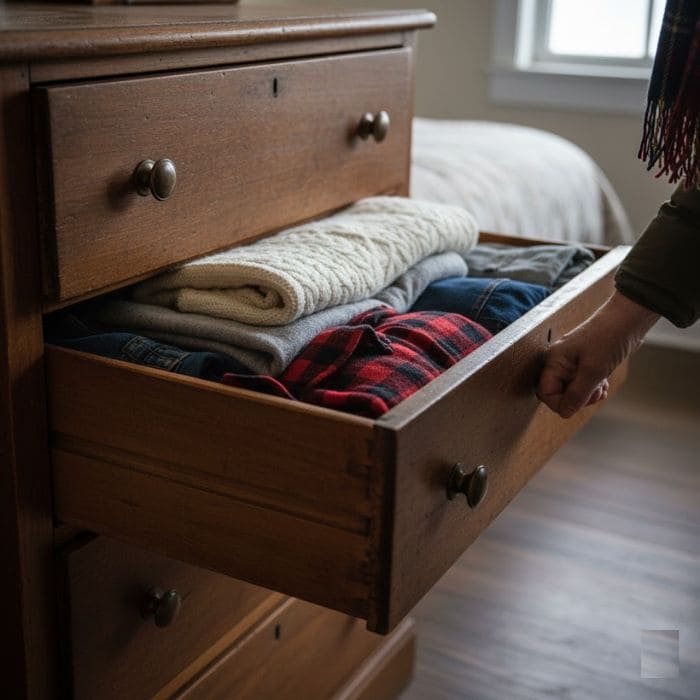
I went inside, opened drawers I hadn’t touched in years, and pulled out old clothes. Soft sweaters with stretched cuffs. Cotton shirts worn thin. Leggings with knees too tired to keep.
I spread everything across the table and spent the entire day cutting and sewing. I measured roughly, stitched imperfectly, adjusted neck holes and wing gaps. Some sweaters were clumsy. Some almost looked thoughtful.
By evening, my hands were sore, my back stiff, and a small pile of chicken-sized sweaters sat beside me. Tired, but proud.
The First Sweater, and the First Doubt
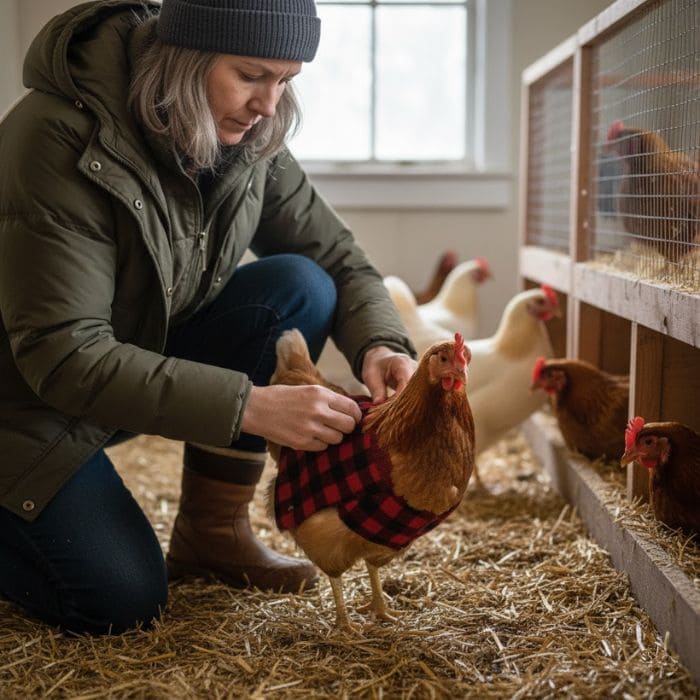
The next morning, I chose a calm hen and slipped a sweater over her carefully. She stood still, not relaxed, but confused. She took a few stiff steps, stopped, and looked down at herself as if trying to understand what had happened.
She tried to fluff her feathers, then stopped. The fabric pressed them flat. She pecked at the edge of the sweater once, then again, harder this time.
Something about the scene made my stomach tighten. At that moment, I still didn’t know what I had done wrong. I only knew that something didn’t feel right.
What I Hadn’t Understood About Molting
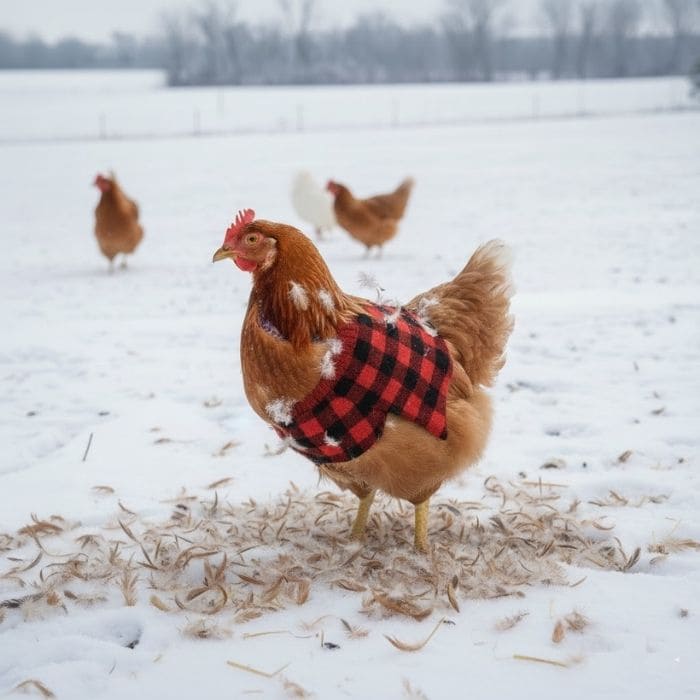
That winter, my flock was molting. Molting is not just losing feathers. It is a full-body process. Chickens drop old feathers and grow new ones that are often thicker, denser, and better suited for cold weather.
During this time, they can look uncomfortable, even vulnerable. Bald patches appear, activity slows and birds seem quieter.
That vulnerability is what triggered my worry. What I didn’t understand yet was that sweaters interfere with molting in ways that are subtle but serious. New feathers grow inside protective sheaths called pin feathers.
These are sensitive, sometimes painful. Fabric rubbing against them causes discomfort and stress. Worse, sweaters prevent chickens from adjusting their feathers naturally, which is how they regulate heat.
The Moment I Knew I Was Wrong
By midday, I noticed moisture trapped beneath the sweater. Not enough to drip, but enough to dampen feathers. Damp feathers pressed flat against skin in freezing weather are dangerous. Insulation only works when it can trap air, and sweaters stopped that completely.
I watched the hen stand apart from the flock, unsettled, unable to settle into her normal posture.
Standing there in the cold, my hands numb inside gloves, I felt that sinking feeling that comes when you realize your good intentions have missed the mark. I felt embarrassed, honestly. Embarrassed that I had projected my own discomfort onto an animal whose body works entirely differently than mine.
That afternoon, I removed every sweater I had made. I folded them slowly, quietly, feeling foolish and relieved at the same time.
What Cold Actually Means for Chickens
Healthy chickens handle cold far better than most people realize. Their bodies are designed for it. Feathers fluff and trap warm air. Blood flow adjusts. At night, they roost close together, sharing warmth instinctively.
What they cannot tolerate is moisture, drafts, or restriction. A dry, well-ventilated coop without direct wind matters far more than extra fabric. Deep bedding helps. Consistent food intake helps. Extra protein during molting helps.
Sweaters interfere with all of that. They flatten feathers, trap moisture, and create friction during a time when skin is already sensitive. And they introduce stress where none is needed.
What I Did Instead, and What Actually Helped
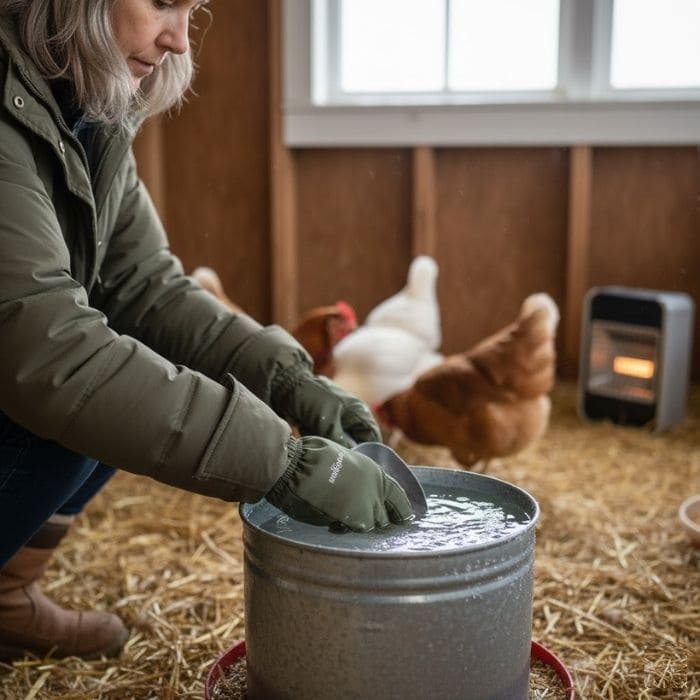
Once I stopped trying to dress my chickens like tiny people, I focused on the basics. I made sure the coop stayed dry, with ventilation high enough to release moisture but positioned to avoid drafts.
Also, I deepened bedding, allowing natural composting warmth to build slowly. Then I increased protein slightly to support feather regrowth during molting. I checked the water constantly to keep it from freezing.
Most importantly, I stopped interfering. Within weeks, new feathers came in thick and glossy. Chickens moved with confidence again.
At night, they fluffed themselves into rounded, insulated shapes that no sweater could ever replicate.